
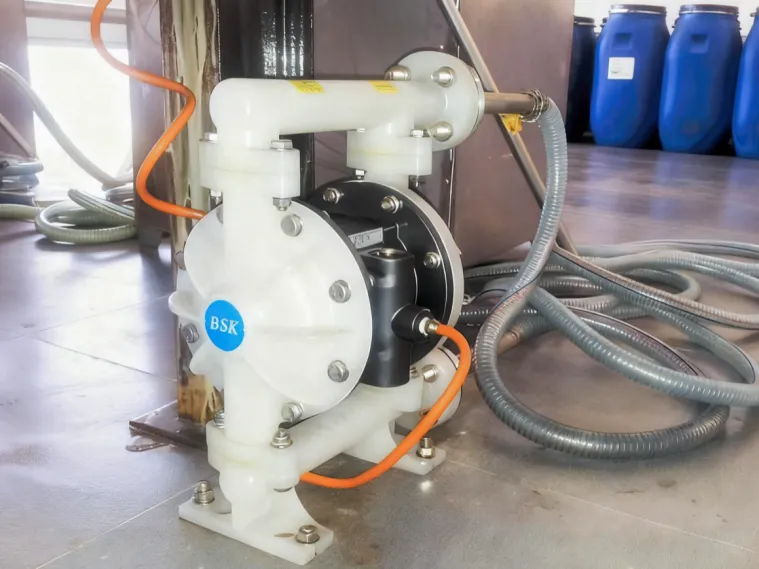
When it comes to transferring strong acids or alkalis in industrial settings, not just any pump will do. These chemicals are harsh, aggressive, and can damage equipment that isn’t built to handle them. The wrong choice can lead to leaks, safety hazards, and expensive downtime. That’s why choosing the right chemical corrosive-resistant diaphragm pump is so important.
If you’re handling corrosive liquids, you need equipment that can stand up to the challenge. But with so many types and materials available, how do you know which one is best for your needs?
In this article, we’ll break it all down for you. You’ll learn what makes acids and alkalis so hard to handle, why pneumatic diaphragm pumps are often the best choice, and how to choose the right materials and design for your specific application. We’ll also explain why BSK FLUID TECHNOLOGY’s products stand out when it comes to durability and performance.
Let’s start by understanding why acids and alkalis are such tough substances to manage.
1. Why Acid and Alkali Media Are So Hard on Pumps
Working with acids like sulfuric acid or hydrochloric acid–or with strong alkalis like sodium hydroxide–isn’t easy. These chemicals are highly reactive. If your pump isn’t made from the right materials, it can corrode quickly, leak dangerous fluids, or even break down completely.
The Real Danger of Corrosive Chemicals
Corrosive fluids can eat away at pump parts over time. The more aggressive the chemical, the faster the damage happens. This can lead to cracks, leaks, and complete failure. If the pump is part of a production line, this failure could stop your entire operation.
Where Are These Chemicals Used?
Many industries rely on acids and alkalis. You’ll find them in chemical processing plants, water treatment facilities, mining operations, and even food and beverage manufacturing. In each case, safety and reliability are key. A pump that can’t handle these fluids safely is a risk no company wants to take.
So, what kind of pump can handle these harsh chemicals without wearing out? That leads us to the next question.
2. Why a Pneumatic Diaphragm Pump is the Smart Choice
Many engineers choose pneumatic diaphragm pumps when dealing with acids and alkalis–and for good reason. These pumps are built differently from other types, like centrifugal or gear pumps. They are designed to be simple, durable, and very safe when handling dangerous fluids.
So, why are they often the first choice?
Top Benefits for Handling Corrosive Liquids
Let’s look at some of the biggest advantages of using a chemical corrosive-resistant diaphragm pump:
- Seal-less design: These pumps don’t have rotating seals, which are common points of failure in other pump types. That means fewer leaks and less chance of chemical exposure.
- Self-priming: They can start pumping even when the fluid source is below the pump, saving setup time.
- Dry-run capability: They won’t get damaged if they run dry for a short period.
- Air-powered: Pneumatic diaphragm pumps use compressed air instead of electricity. This makes them safe in environments where sparks could cause explosions.
- Handles thick or solid-laden fluids: They’re great for slurries and liquids with particles, which are common in chemical processing.
These features make them ideal for aggressive applications. But not all diaphragm pumps are built the same. The materials used can make a big difference in performance and safety.
So, what should the pump be made of?
3. What Materials Are Best for Corrosion Resistance
Choosing the right material is just as important as choosing the pump type. When dealing with acids and alkalis, not all materials will survive.
Best Materials for Pump Bodies and Parts
Here are some of the top material choices for a chemical corrosive-resistant diaphragm pump:
- PTFE (Teflon): Known for its excellent chemical resistance, PTFE is often used for diaphragms and internal parts.
- PVDF (Polyvinylidene Fluoride): Strong and durable, great for handling acids and solvents.
- Polypropylene (PP): Lightweight and affordable, suitable for many basic applications.
- SS316 Stainless Steel: Good for some chemical applications, but not suitable for strong acids.
Material Comparison Chart
Let’s compare some common options:
| Material | Chemical Resistance | Common Use |
| PTFE | Excellent | Strong acids/alkalis |
| PVDF | Very Good | Acids, solvents |
| Polypropylene | Good | Light acids/alkalis |
| SS316 | Moderate | Weak acids, food-grade use |
By choosing the right combination of materials for the body, diaphragms, and valves, you’ll get a pump that lasts longer and performs more safely.
Now that we know which materials work best, let’s move on to how you can choose the right pump for your specific needs.
4. How to Choose the Right Chemical Corrosion-Resistant Diaphragm Pump
With so many models and materials on the market, how can you make the best choice for your application?
Key Factors to Consider
Here are some of the most important things to keep in mind:
- Chemical compatibility: Always check the chemical resistance chart. Make sure all parts that come in contact with the fluid are compatible.
- Temperature: Higher temperatures can increase corrosion, so choose materials that stay stable under heat.
- Pressure and flow rate: Pick a pump that matches your system’s needs.
- Viscosity and solids: Make sure the pump can handle the fluid thickness and any particles present.
Common Mistakes to Avoid
Some buyers look only at the price and choose the cheapest option. But this can be costly in the long run if the pump fails early. Another mistake is ignoring the diaphragm material. The diaphragm is the heart of the pump–if it breaks, the whole system stops.
A smart choice means better performance, fewer repairs, and more peace of mind.
That brings us to the next important point: which manufacturer can you trust for this kind of job?
5. Why BSK FLUID TECHNOLOGY is the Best Choice for Your Application
There are many pump brands out there, but not all offer the same quality or service. BSK FLUID TECHNOLOGY focuses on delivering dependable and long-lasting solutions for industries that handle tough chemicals every day.
What Makes BSK FLUID TECHNOLOGY Pumps Stand Out
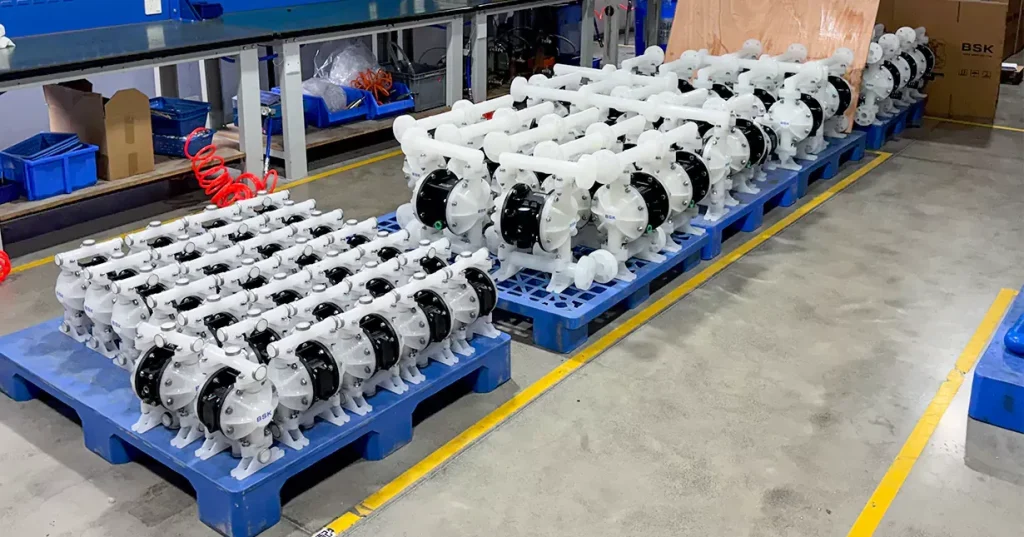
- Wide material selection: From PTFE to PVDF to SS316, BSK offers the right pump material for every chemical.
- Built for harsh chemicals: Each chemical corrosive-resistant diaphragm pump is engineered to handle aggressive fluids safely.
- Strong international support: BSK FLUID TECHNOLOGY supplies to clients around the world and offers OEM services for custom needs.
- Competitive pricing: High quality doesn’t have to mean high cost. BSK offers reliable pumps at affordable rates.
What Customers Are Saying
Clients in chemical manufacturing, wastewater treatment, and mining have praised BSK pumps for their durability and ease of use. The pumps run smoothly, need less maintenance, and give customers confidence in tough conditions.
If you want a pump that works hard without giving you problems, BSK FLUID TECHNOLOGY is a solid choice.
Conclusion
Handling strong acids and alkalis is serious business. You need equipment that is tough, reliable, and built to last. A chemical corrosive-resistant diaphragm pump gives you a smart, safe, and long-lasting solution for handling even the most aggressive fluids.
We’ve looked at why these pumps are the best choice, what materials work best, and how to pick the right model for your needs. We also shared why BSK FLUID TECHNOLOGY pumps are trusted by professionals worldwide.
Still have questions or need help choosing the right pump?
We’re here to help. Reach out to the BSK FLUID TECHNOLOGY team today and let us match you with the best solution for your application. No pressure, just expert support.
FAQs
1. What is a chemical corrosive-resistant diaphragm pump?
It is a type of pump designed to handle strong acids, alkalis, and other corrosive fluids without breaking down or leaking.
2. Why are diaphragm pumps good for corrosive chemicals?
They have no rotating seals, are air-powered, and are made from special materials that resist chemical damage.
3. Which materials are best for chemical-resistant pumps?
PTFE, PVDF, polypropylene, and SS316 are commonly used depending on the chemical and temperature.
4. Can a chemical corrosive-resistant diaphragm pump run dry?
Yes. Most diaphragm pumps can run dry for short periods without damage, making them safer for tough jobs.
5. How do I choose the right pump for acids and alkalis?
Check the chemical compatibility, temperature range, flow rate, and pressure needs of your system.
6. What industries use these pumps?
They are used in chemical processing, water treatment, mining, food production, and pharmaceuticals.
7. Are BSK FLUID TECHNOLOGY pumps suitable for international buyers?
Yes. BSK FLUID TECHNOLOGY supplies chemical corrosive-resistant diaphragm pumps to clients worldwide with OEM support.
8. What makes BSK FLUID TECHNOLOGY pumps stand out?
They offer strong chemical resistance, long service life, competitive prices, and global technical support.
9. How long do chemical-resistant diaphragm pumps last?
With proper selection and maintenance, they can last several years–even in harsh chemical environments.
10. Can I use one pump for different chemicals?
Only if all the chemicals are compatible with the pump’s materials, always check the chemical resistance chart first.
Explore BSK Pneumatic Diaphragm Pumps
Looking for the right AODD pump for your application? BSK Fluid Technology offers a complete range of pneumatic diaphragm pumps in aluminum, stainless steel, cast iron, PP, and PVDF. With 30+ years of manufacturing expertise and patented ceramic air valve technology, we deliver reliable fluid transfer solutions worldwide.
Frequently Asked Questions
What pump body materials are available?
BSK offers five body materials: Aluminum alloy (general purpose, oils), Stainless steel 316 (corrosive chemicals, food, pharma), Cast iron (low-cost industrial, wastewater), Polypropylene/PP (acids, alkalis, lightweight), and PVDF (strong acids, solvents, high-purity).
When should I choose PTFE vs Santoprene diaphragms?
Choose PTFE for strong acids, aggressive solvents, high-purity or temperatures above 80°C (shorter flex life, higher cost). Choose Santoprene for mildly corrosive/neutral fluids, longer diaphragm life (2-3x vs PTFE), food-grade use and cost efficiency.
Can BSK pumps handle food-grade and sanitary applications?
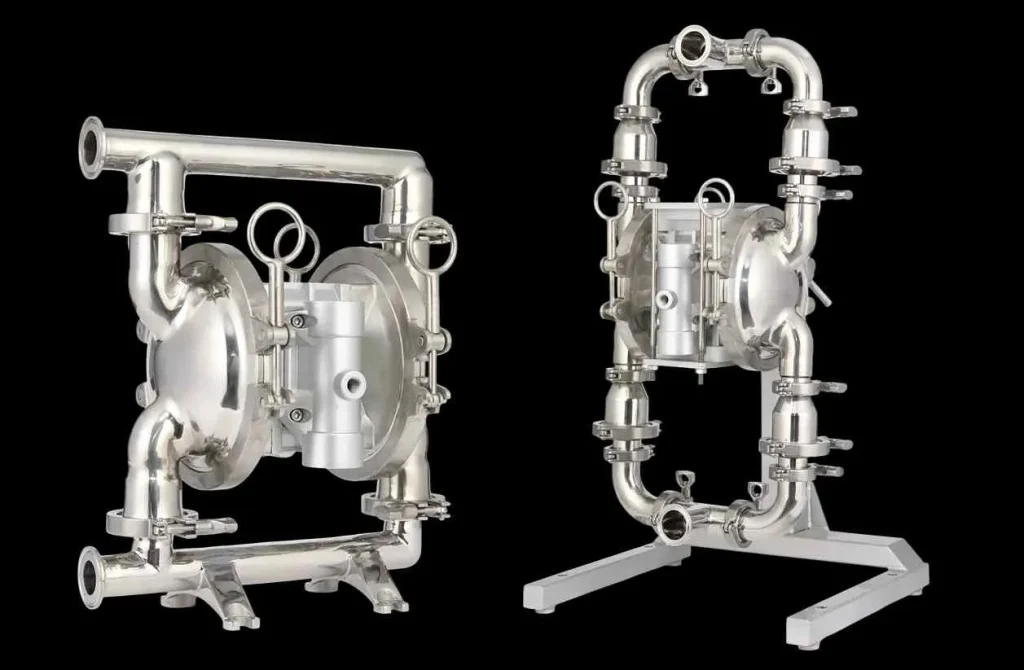
Yes. BSK sanitary AODD pumps feature a 316L body with electropolished finish (Ra ≤ 0.8 μm), tri-clamp connections for CIP, FDA-compliant diaphragms, and no dead legs for complete drainage. They are used in dairy, beverages, sauces, edible oils and chocolate transfer.
Are BSK pumps suitable for explosive / ATEX environments?
Yes. AODD pumps are powered by compressed air with no electricity, making them inherently safe for ATEX Zone 1/2 (gas) and Zone 21/22 (dust). For ATEX compliance use a conductive grounded metallic body or PTFE diaphragms with conductive additive for plastic bodies, and route the air exhaust to a safe area.
Where can I get a quote for the right AODD pump for my application?
BSK Fluid Technology engineers provide a personalized pump selection within 24 hours. Share your fluid properties, flow rate and pressure requirements via the Contact page or WhatsApp +86-134-3105-8937, and we will recommend the optimal model from our aluminum, stainless steel, cast iron, PP and PVDF AODD range.


