
Introduction
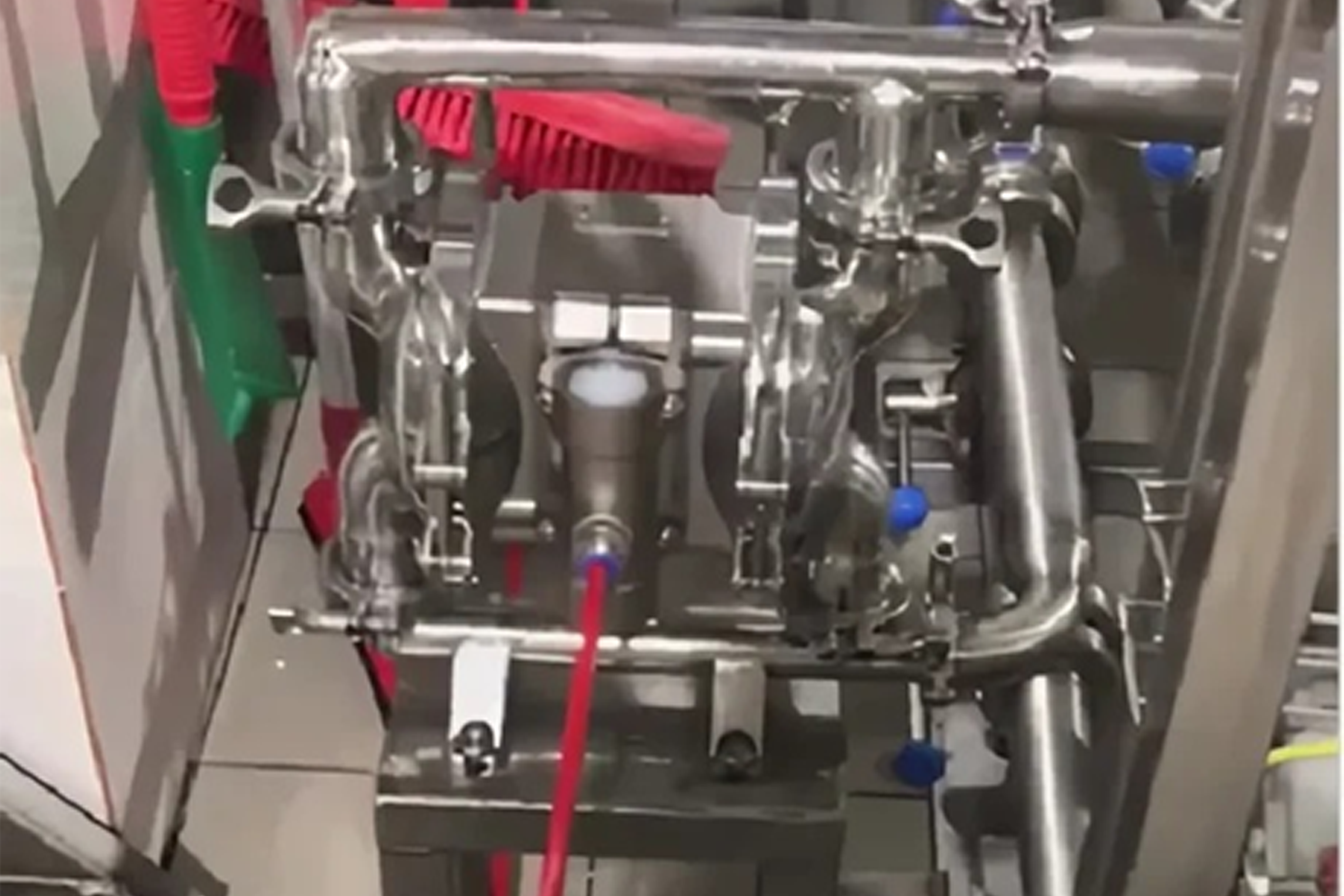
air operated diaphragm pumps (AODPs) are a type of positive displacement pump that can move fluids with high efficiency and great reliability. It does not use electricity as the driving force, but rather compressed air that makes them suitable for use in hazardous or explosive environments. Today, in this introduction, you will be learn about the basic operating principles of air operated diaphragm pumps as well as their added advantages and common applications.
How AODPs Work
Air-operated diaphragm pumps are fabricated around a simple mechanic: On the shaft between two diaphragms is a common channel in these pumps. Compressed air pushes one of the diaphragms to the other, and fluid at the other side is displaced by this. There’s less pressure on the fluid, and more will be sucked into the pump because a vacuum is subsequently created under it. The process repeats, enabling AODPs to pump fluid continually.
The Main Merits of Air-Operated Diaphragm Pumps
Versatility: AODPs are able to handle many different kinds of fluids, including corrosive and viscous substances. They can also cope with liquids containing solids or abrasives.
Safety: Since they use air as the motive force, these pumps pose no risk of sparking and are therefore safe to use in explosive environments.
Low Maintenance: Unlike other pumps, AODPs have fewer moving parts, so that breakdowns are less likely and maintenance costs can be held down. Please bear in mind that air- to diaphragm pumps are described in this article as they have seen wide application.
General Fields of Application
Chemical Industry: Handling aggressive solvents, acids, and bases.
Water treatment: Pumping sludge and other semi-solids in wastewater treatment processes.
Food and Beverage: Transferring ingredients that are sensitive to shear, like baby foods and ketchup.
Pharmaceuticals: Moving high-purity fluids in a sterile environment.
Side by Side: Air Operated Diaphragm Pump vs. Centrifugal Pump
| Feature | Air Operated Diaphragm Pump | Centrifugal Pump |
|---|---|---|
| Power Source | Compressed Air | Electricity |
| Fluid Type | It can handle solids, best for handling of clear liquids | Most suitable only in moderate clarification activities |
| Safety | Higher (no electrical components) | Lower (risk of sparks) |
| Maintenance | Lower (few moving parts) | Higher (mechanical moving quality) |
Maintenance Tips for Air Operated Diaphragm Pumps
Regular Examination and Maintenance : Check diaphragms and valves regularly for wear and tear.
Air Supply: Ensure that the air supply is dry and clean.
Proper Installation: To ensure optimal performance and longevity, follow manufacturer guidelines for installation.
By learning air operated diaphragm pump technology; people made clear the pump’s role in various industries and application prospects for it in their own operations. For those dealing with hazardous materials or in need of a pump for food processing, an AODP offers both versatility and safety.
Important Features of Air Operated Diaphragm Pumps
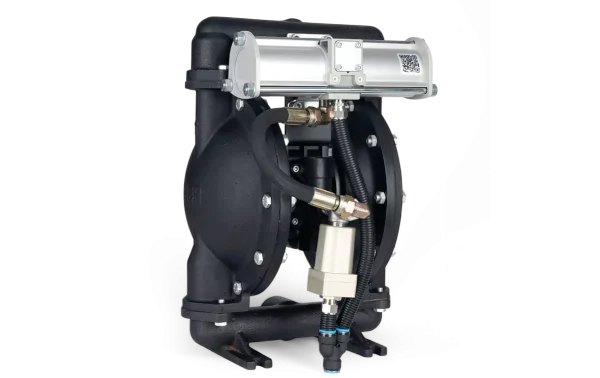
Whether you’re buying air operated diaphragm pumps for your industry applications or planning to install them in a tank farm, understanding their basic characteristics will greatly influence the decisions that must be made. These pumps have a name for themselves as efficient, adaptable machinery. Recognized for their reliability and versatility as well, these pumps are also known to serve many purposes with one.
Versatility in Fluid Handling
One of the main attractions of these pumps is their versatile fluid handling capability. Whether dealing with aggressive chemicals in the laboratory or with delicate food products in an industrial kitchen, they are designed to carry and protect these different types of media. The design of the diaphragm pumps provides for a wide range of installation possibilities with no risk to sensitive fluids.
Chemicals: Can resist corrosive substances and will not easily dissolve.
Viscous Fluids: Retain their pumping capacities for heavy media.
Food Products: Be used for food-related markets where no impurities are wanted.
Dry Running Capability
Aired operated diaphragm pumps unlike many other pump types can run dry without causing damage to the pump. This capability also makes certain that operations can continue without supervision when because of intermittent stopping of the flow is needed, which is particularly useful in such cases at all time to keep someone there on duty without interruption.
Self-Priming Nature
Air operated diaphragm pumps are self-priming which means they can be sited high above the fluid source. This feature makes the job easier to set up, and reduces the chance of pump cavitation so they are suitable for applications with difficult suction conditions.
Low Shear Operation
For industries in which the keeping of a particular fluid’s integrity is significant such as manufacturing emulsions or handling shear-sensitive fluids, air operated diaphragm pumps are an ideal choice. The design of these pumps, based upon air moving slowly under pressure, means that once fluid is engulfed and the running mechanical device closes off liquid charge lines according to preset speeds for each machine, what goes into each end product will be completely uninfluenced by what comes out from start to finish.
Comparison Table: Air Operated Diaphragm Pumps vs. Centrifugal Pumps
| Feature | Air Operated Diaphragm Pumps | Centrifugal Pumps |
|---|---|---|
| Fluid Versatility | High | Moderate |
| Dry Running Capability | Yes | No |
| Self-Priming | Yes | No |
| Low Shear | Yes | No |
| Maintenance Requirements | Low | High |
Easy of Maintenance
Maintenance air operated diaphragm pumps is generally not too difficult. The machine has a simple design and few moving parts, that lowers the chances Mechanical failure can become less during down-time for repair.
Routine Inspection: Regularly check diaphragms and valves.
Replacement Parts: All parts that might need replacement are simple and easy to use ensuring quick repair times.
Energy Efficiency
Finally, another distinct advantage is the higher energy efficiency of air operated diaphragm pumps. Employing compressed air as their power source means they can be more affordable environmentally and most installations are profitable built to AFSEC standards and paid off by the customer. buyer in 15mins
Understanding these key features will help you better evaluate how air-operated diaphragm pumps can meet the specific requirements of your applications, ensuring efficient and reliable operation under a variety of operational conditions.
Problem One: Handling Corrosive Fluids
When you engage in industrial processes it is an absolute must that your equipment is able to stand up to the corrosive nature of these fluids. Air-operated diaphragm pumps have been specially designed with this in mind. Here’s how these pumps may be just what you need to deal effectively with corrosive fluids such as these.
Understanding Corrosive Fluids
Corrosive fluids, such as acid and alkali, can destroy most items they touch. The key to handling them is to use equipment that can stand up against their corrosive nature.
Why choose air-operated diaphragm pumps?
Air-operated diaphragm pumps offer numerous features to make them “just right” for such applications:
Material selection : There are different material choices like polypropylene, PVDF and PTFE – these have corrosion resistance features.
Seal-less design: By removing the need for sealing, there was no leakage. This is a problem common to other types of pumps when dealing with corrosive fluids.
Variable flow and pressure: You can easily adjust flow rate and pump pressure settings to suit your needs, suit the needs of your process–if direct pressure was past by it meant damage was being done which minimizes smashing pots or other events by over force.
Comparative Analysis: Air-operated Diaphragm Pumps Versus Other Kinds of Pumps
| Feature | Air-Operated Diaphragm Pumps | Centrifugal Pumps | Gear Pumps |
|---|---|---|---|
| Material Resistance | High Various Materials | Relatively Low | Low |
| Type of Corrosive Capability | Excellent | Poor | Poor |
| Maintenance Issues | Low | High | Moderate |
| Operational Cost | Moderate | Low | High |
When time is of the essence air operated diaphragm pumps are far better than other sorts for managing corrosive liquids. This is especially true when it comes to material resistance and maintenance needs.
Follow the Steps to Using Air Operated Diaphragm Pumps for Corrosive Fluids
Selection of Material: Choose a pump that is made from materials that are compatible with the corrosive fluid in your process.
Installation: Ensure that the pump is correctly installed in a well ventilated area so as to avoid local expansion of fumes and their possible danger.
Operation: Match the flow rate and pressure according to the characters of the fluid you are processing and your requirement.
Maintenance: Regularly check the pump for signs of wear or chemical damage and replace parts as necessary.
Using these four steps, the service life and efficiency of air operated diaphragm pumps in the transport of corrosive fluids can be maximized.

Problem 2 – High Viscosity Fluid Transfer Solved by Air Operated Diaphragm Pumps
When handling the transfer of high viscosity fluid like oils, syrups and heavy creams traditional pumping solutions often fall short. In these circumstances, air operated diaphragm pumps are superior owing to their unique design and operational features. Here is how they tackle the problem.
High Viscosity Fluids: The Problem
High viscosity fluids are thicker and more resistant to flow than water-like substances. This can cause clogging, slow transport, and even damage to your pump equipment. The major problems are:
Maintain rate of flow constant: *Pumping fluid with high viscosity calls for pumps designed to keep up a level delivery in face of fluid resistance.
Prevent harm to pump contents: *With a thicker liquid, the mechanical parts will be worn more than usual.
Energy Efficiency Pumping a thicker liquid typically costs more fuel.
How Diaphragm Pumps Work and Air Works moves on two levels: One that introduces air in; the other does not introduce a fluid yet, but rather carries the liquid into chamber F or G. The Diaphragm operates with a compressed spring acting against it both sides at once gentle push” reinforcement expansion of the rubber.
Self-Priming Capability: Without needing manual priming, variegated fluid levels and viscosities are no problem for this pumpaty all.
Adjustable Flow Rate and Pressures: One can easily change the pump’s flow rate by changing the air pressure, adapting them to different fluid viscosities without having to make any mechanical adjustments.
The following steps must be heeded to effectively integrate air operated diaphragm pumps into general operations high viscosity fluid transfer:
Assess Your Fluid’s Viscosity: If the possibility of fluid slumping too easily makes it resistive or not suit your application, the pump’s specifications should be crafted accordingly to fit the job.
Select the Best Pump Size and Material: A pump take care of the volume and kind of fluid being worked on without giving trouble in any way. The materials it is composed of must be such that they won’t corrode or wear usefully.
Proper Installation: deserve that the installation seeks as far as possible to eliminate bends and restrictions in piping, in order Keep the continuity flowing.
Regular Maintenance: Make sure you regularly inspect to see if the diaphragm is wearing, also to check for air leakage–common with a pump used often.
With a firm grasp of its capabilities, the advantages of an air operated diaphragm pump become apparent. You can increase the efficiency and reliability of your high viscosity fluid transfer by a large measure.
Problem 3 Solved by Air Operated Diaphragm Pumps: Dry Running Capabilities
When dealing with industrial processes, finding a pump that can handle dry running without damage is a problem that you may encounter. Air operated diaphragm pumps excel in this area, providing a better solution where other pumps may fail. Let’s take a longer look at how these pumps manage dry running and why they are the only (and superior) choice for your particular needs.
Understanding Dry Running
Commonly referred to as “running dry” in pump parlance. This can be damaging to most pumps. Often it means the pump can overheat and lack of lubricant when this happens. But air operated diaphragm pump units have a unique design that allows them to operate in this state without suffering any harm at all. This is due not to their fluid; they are pumped not for cooling or lubrication. Ease of maintenance. The unit is easy to run in any weather and any location.
Key Features of Air Operated Diaphragm Pumps
Self-priming capabilities: These pumps can handle a varying liquid level, including totally dry start-ups.
Solid handling: They can pass solids up to nearly their own inlet/outlet size without clogging.
Variable flow rate and discharge pressure: You can adjust these parameters to suit the process requirements without risking damage to the pump. Evaluated. With fewer breakdowns, the overall cost of repair will be significantly less.
Benefits of Using Air Operated Diaphragm Pumps for Dry Running
Reduced downtime: Because these pumps can cope with dry conditions, there is no need to often halt operations in order fix a broken pump.
Lower maintenance costs: With fewer breakdowns, the overall maintenance costs will be significantly reduced.
Versatility: These pumps can be used in a wide variety of situations, without being limited by the presence of a liquid.
Frequently Asked Questions About Air Operated Diaphragm Pumps
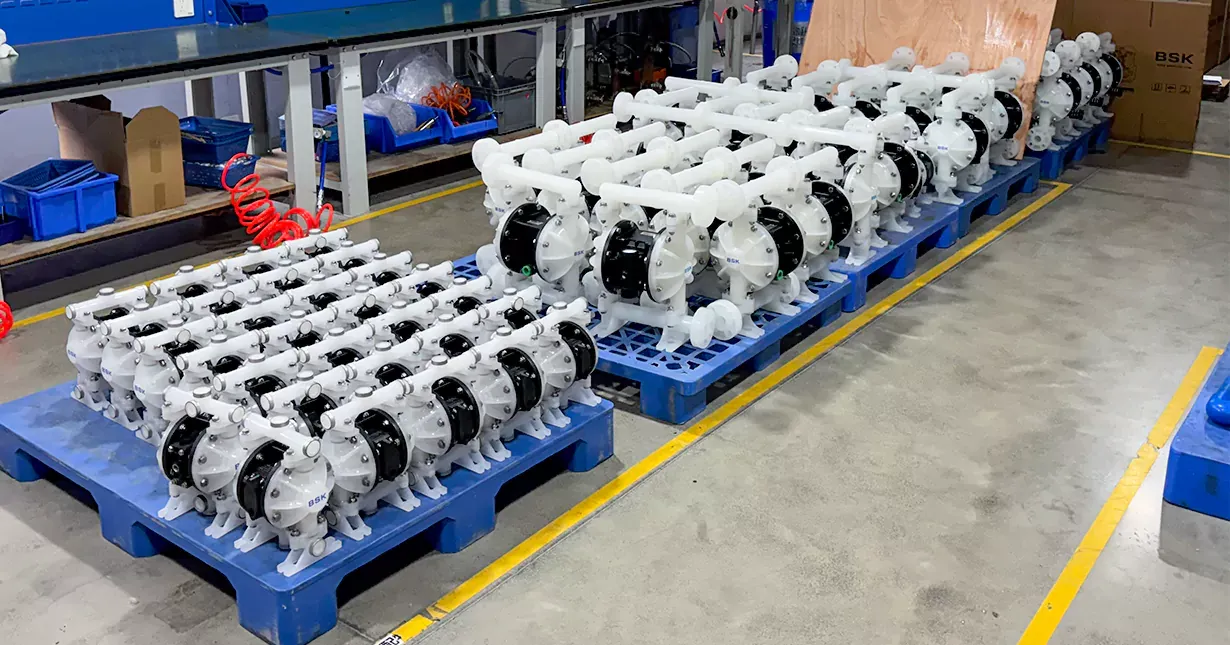
When you consider air operated diaphragm pumps for a particular industrial application, you may have a number of questions about how they work, the benefits they offer and whether they suit your needs. In this section we’ll answer some of these frequently posed queries to help you decide whether this is the pump for you.
What is an Air Operated Diaphragm Pump?
An air-operated diaphragm pump (AODP) is a type of positive displacement pump that uses compressed air as its power source. The pump consists of a diaphragm which moves back and forth, creating a vacuum to draw the fluid through a check valve on one side and push it out through another check valve on the other.
Air Intake: This is where compressed air enters the air valve.
Movement of the Diaphragm Air pressure causes up-and-down movement of the diaphragm.
Fluid Movement As the diaphragm moves, it creates a vacuum that both sucks in and then expels fluid.
Main Advantages of Air Operated Diaphragm Pumps:
Versatility: Handles a wide range of fluids, including even corrosive and viscous liquids.
Safety: No electricity is needed, reducing the risk of sparks when it interacts with combustible gases (such as hydrogen sulfide).
Durability: With fewer moving parts to go wrong in use or storage, they are less likely than mechanical-driven alternatives which need regular servicing every six months for example just because there was an oil leak somewhere on your old one causing spares from neighbouring parts to leak all over it whenever liquid came through!
Typical Uses of Air Operated Diaphragm Pumps:
Chemical Transfers: Pressure-washing can be achieved.
Sludge and Water Treatment: Dulegil is the leading product for the dosing and sludge markets.
Food/Beverage: Ideal where a clean treatment is needed such as with dairy or breweries, its gentle handling means little product waste will only occur.
Comparison between air operated diaphragm pumps and centrifugal pumps
| Feature | Air Operated Diaphragm Pumps | Centrifugal Pumps |
|---|---|---|
| Power Source | Compressed air | Electric motor |
| Fluid Type | Corrosive, viscous, slurry | Clean, low-viscosity |
| Safety | Higher (no electrical components) | Lower (risk of sparks) |
| Maintenance | Lower (fewer moving parts) | Higher (more mechanical wear) |
Maintenance Tips
Regular Inspection: Check diaphragms and valves for any wear and tear.
Air Supply: Ensure clean, dry air to avoid corrosion.
Lubrication: Some models need regular lubrication of the air motor.
By understanding these aspects of air operated diaphragm pumps, you can make a well-informed decision regarding whether they are suitable for your industrial requirements. Remember, the right pump can bring major benefits in efficiency and safety.
Conclusion
Greater Efficiency: For different kinds of industrial applications, air operated diaphragm pumps greatly improve productivity– compared to simply relying on vacuum or pressure delivery methods that have problems like these which cannot be overcome.
Lower Costs: By reducing maintenance and downtime, diaphragm pumps that are air operated contribute to industries saving money. Such a cost-effective solution is possible only in the long term.
Adaptability: The versatility of air operated diaphragm pumps makes it possible for them to handle a wide range of fluids: abrasive materials, viscous and shear-sensitive products—thus suiting for all sorts urban putting plants in the world the largest sterility needs packer.
Eco-friendly: Leakage-free design and the ability to handle dangerous products in air operated diaphragm pumps makes it possible to continue environmentally friendly industrial operations.
Easy Maintenance: Air operated diaphragm pump is characterized by simple construction and few moving parts. This makes it easy to maintain, and helps prevent crashes and shutdown time.
Q&A
Q: What are the main advantages of employing air operated diaphragm pumps in industry?
A: Air operated diaphragm pumps have the advantages such as self-priming ability, ability to run dry and solids-handling capability to deal with abrasive material in an efficient way.
Q: How do air operated diaphragm pumps aid operational efficiency in industries?
A: Air operated diaphragm pumps boost efficiency by constantly providing flow rates, handling any viscosity flam directly, and working under difficult conditions reliably.
Q: Is air operated diaphragm pumps able to handle corrosive chemicals?
A: Yes, air operated diaphragm pumps have all along been used to deal with acids thanks to their chemically-resistant material and leak-free design. Ensuring safe and effective liquid transfer.
Q: Can air operated diaphragm pumps be applied in food and beverage production systems?
A: Yes, air operated diaphragm pumps are widely used in food and beverage production because they are made to be sterile, can handle products gently, and are compliant with regulations.
Explore BSK Pneumatic Diaphragm Pumps
Looking for the right AODD pump for your application? BSK Fluid Technology offers a complete range of pneumatic diaphragm pumps in aluminum, stainless steel, cast iron, PP, and PVDF. With 30+ years of manufacturing expertise and patented ceramic air valve technology, we deliver reliable fluid transfer solutions worldwide.
Frequently Asked Questions
How does fluid viscosity affect AODD pump performance?
Higher viscosity reduces flow rate and increases air consumption. 0-500 cP: minimal reduction. 500-2000 cP: 10-20% reduction. 2000-5000 cP: 30-50% reduction (size up one port). 5000-10000 cP: significant reduction, use the largest practical pump. For viscous fluids use short, wide suction pipes.
What suction lift can an AODD pump achieve?
BSK AODD pumps achieve up to 4-5 meters dry lift and 7-9 meters wet lift. Actual lift depends on air pressure, fluid viscosity, suction pipe diameter/length and altitude. For lifts over 4 meters, flooded suction (pump below fluid level) is recommended.
What is the maximum discharge pressure of an AODD pump?
Maximum discharge pressure equals the air supply pressure minus minimal internal losses. Standard BSK pumps reach 6-8 bar; high-pressure models reach up to 15-16 bar via a booster configuration. The pump cycles slower as discharge pressure rises and stalls when discharge equals air supply pressure.
How much compressed air does an AODD pump consume?
Air consumption at 4 bar: 1/2" pump 0.3-0.5 m³/min, 1" pump 0.8-1.2 m³/min, 2" pump 2.5-4.0 m³/min, 3" pump 4.5-7.0 m³/min. The BSK ceramic air valve saves up to 30% air versus conventional metal valves.
Where can I get a quote for the right AODD pump for my application?
BSK Fluid Technology engineers provide a personalized pump selection within 24 hours. Share your fluid properties, flow rate and pressure requirements via the Contact page or WhatsApp +86-134-3105-8937, and we will recommend the optimal model from our aluminum, stainless steel, cast iron, PP and PVDF AODD range.


