
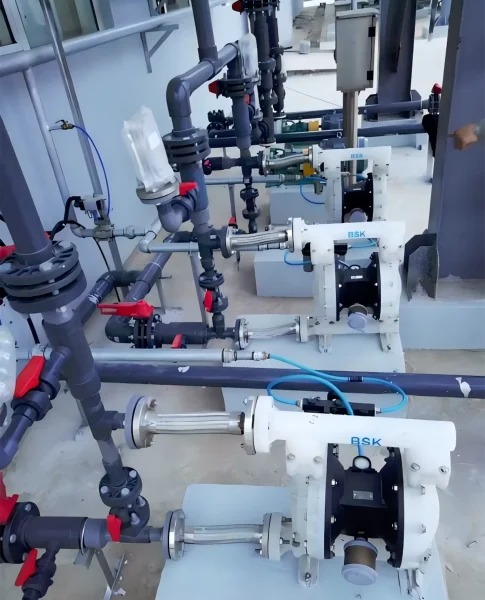
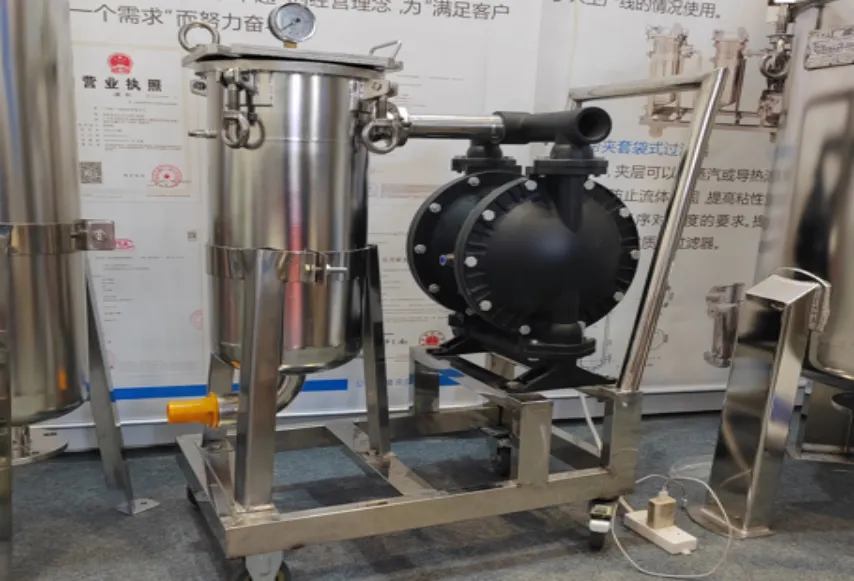
Mobile filters are vital for on-site fluid purification—from construction-site wastewater treatment to manufacturing lubricant recycling and remote emergency water filtration. Yet their performance depends on pumps that meet “mobility, harsh-condition resilience, and leak-free operation” needs—gaps traditional electric pumps often leave. BSK’s pneumatic diaphragm pumps have become a game-changer, with a recent chemical wastewater filtration project underscoring their role in boosting efficiency and cutting maintenance.
Mobile Filter Pain Points: Traditional Pumps Fall Short
Mobile filters need lightweight, flexible pumps, but electric centrifugal/gear pumps struggle with three core issues:
Portability Limits: Electric pumps require external power (generators/sockets) and weigh over 20kg, making them hard to pair with compact mobile filters—especially in off-grid areas.
Harsh Condition Vulnerability: On-site fluids (acidic wastewater, impurity-laden oil) corrode ordinary pumps, while dust and vibrations damage electric motors, causing frequent breakdowns.
Leak & Safety Risks: Shaft seals wear quickly in mobile use, leading to fluid leaks and site contamination. In explosive environments (e.g., petrochemical waste), electric sparks add hazards.
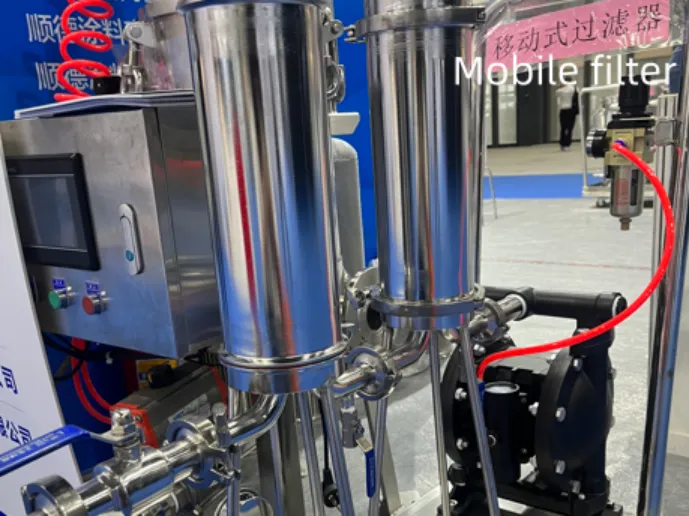
BSK Pumps: Tailored for Mobile Filter Needs
BSK’s pneumatic diaphragm pumps address these pain points with four key optimizations:
1. Lightweight & Cordless for Mobility
With compact aluminum alloy or PP bodies, BSK pumps weigh just 8–12kg (half traditional electric pumps). Powered by 80–100 PSI compressed air, they need no cords or generators—easy to mount on small mobile filters and move across sites.
2. Corrosion & Impact Resistance
Wetted parts offer two options: food-grade PP for acidic/alkaline fluids, and 316 stainless steel for oil/chemicals—both resistant to corrosion and on-site debris. Sealed diaphragm structures protect internal components from dust and vibrations, ensuring stable operation.
3. Leak-Free & Explosion-Safe
“Shaft seal-free + diaphragm isolation” design separates fluid and drive systems, eliminating seal leaks. No electric motors/wiring means inherent explosion safety—ideal for flammable environments, meeting on-site safety standards.
4. Adjustable Flow to Match Filters
Operators tweak flow rates (5–50 L/min) via air pressure, aligning with filter capacity. This avoids overloads or backups, ensuring consistent efficiency for both emergency low-flow and high-volume industrial needs.
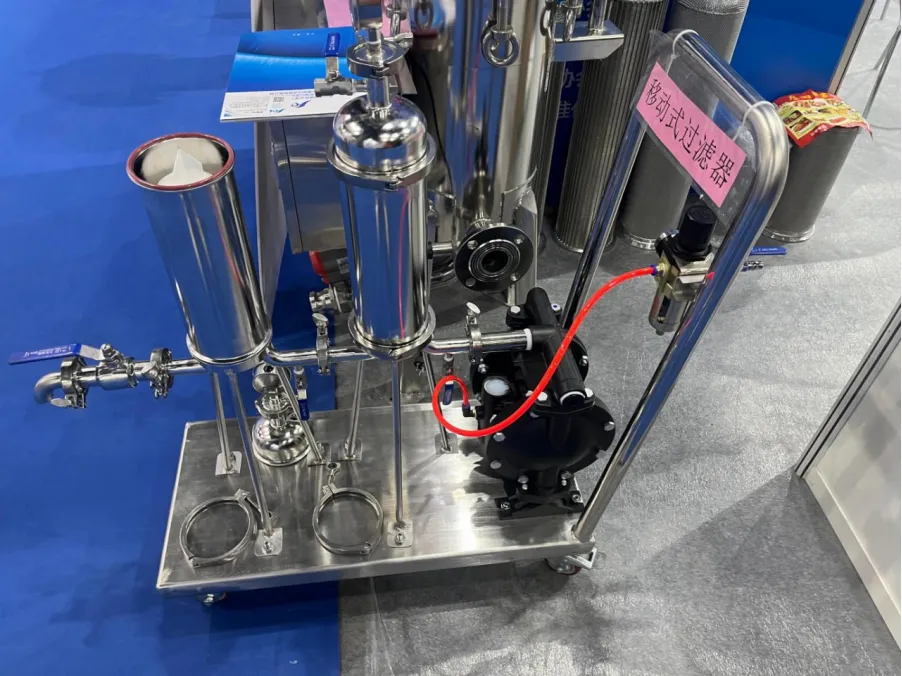
Application Success: Chemical Wastewater Filtration
A South China chemical manufacturer upgraded mobile filters to BSK pumps (replacing old electric models). After 3 months:
Mobility Boost: Lighter pumps cut filter movement time by 40%, no generators needed—critical for scattered wastewater points.
Zero Breakdowns: Corrosion-resistant PP bodies withstood 5–6 pH acidic wastewater; sealed design prevented dust damage (vs. 2–3 monthly repairs for old electric pumps).
Leak-Free Efficiency: No leaks reduced cleanup time, while adjustable flow stabilized filter throughput—daily wastewater treatment capacity rose 25%.
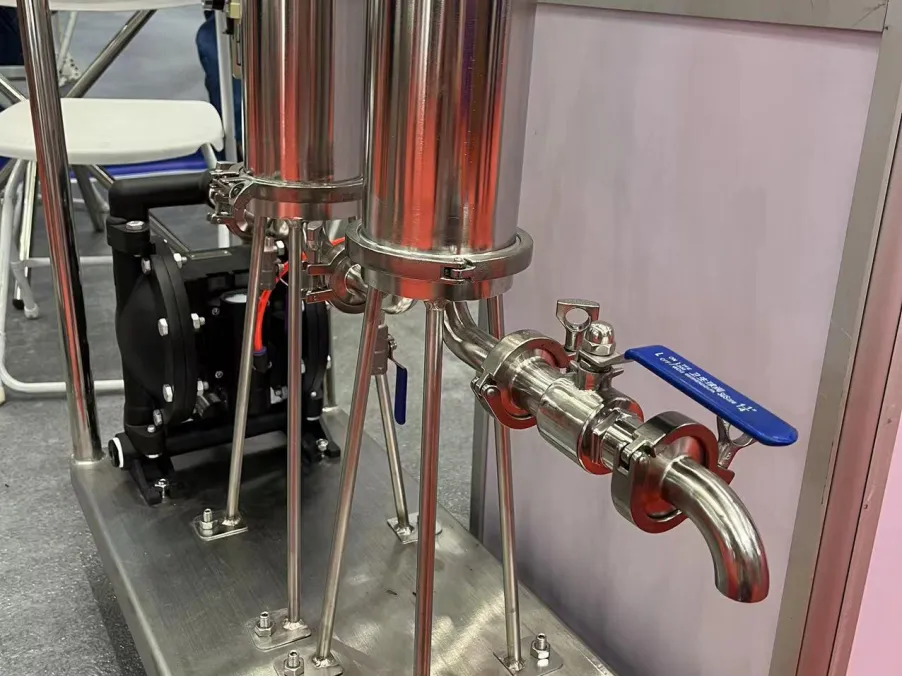
Why BSK Stands Out
Mobile filtration’s “on-the-go” nature demands flexibility over raw power—exactly what BSK pumps deliver. Beyond wastewater, they work for mobile oil filtration (construction machinery lubricant recycling) and emergency water purification (post-flood relief), adapting to diverse fluids and sites.
For businesses relying on mobile filters, BSK’s pumps turn cumbersome operations into smooth, low-maintenance workflows.
Explore BSK Pneumatic Diaphragm Pumps
Looking for the right AODD pump for your application? BSK Fluid Technology offers a complete range of pneumatic diaphragm pumps in aluminum, stainless steel, cast iron, PP, and PVDF. With 30+ years of manufacturing expertise and patented ceramic air valve technology, we deliver reliable fluid transfer solutions worldwide.
Frequently Asked Questions
How much compressed air does an AODD pump consume?
Air consumption at 4 bar: 1/2" pump 0.3-0.5 m³/min, 1" pump 0.8-1.2 m³/min, 2" pump 2.5-4.0 m³/min, 3" pump 4.5-7.0 m³/min. The BSK ceramic air valve saves up to 30% air versus conventional metal valves.
Why is my diaphragm pump losing pressure or flow?
Common causes: worn valve balls/seats (replace valve kit), blocked suction strainer (clean), insufficient air supply (check compressor), worn diaphragms (replace set), sticking air valve (clean/replace), or blocked muffler. Confirm discharge pressure has not risen to equal air supply pressure.
How long do AODD pump diaphragms last?
Diaphragm life: Santoprene 3-20 million cycles, PTFE 2-12 million, Viton 3-15 million (depending on duty). Life is reduced by high pressure, high temperature, abrasive particles, cavitation and rapid cycling. Replace diaphragms in pairs and keep spare kits on hand.
How does fluid viscosity affect AODD pump performance?
Higher viscosity reduces flow rate and increases air consumption. 0-500 cP: minimal reduction. 500-2000 cP: 10-20% reduction. 2000-5000 cP: 30-50% reduction (size up one port). 5000-10000 cP: significant reduction, use the largest practical pump. For viscous fluids use short, wide suction pipes.
Where can I get a quote for the right AODD pump for my application?
BSK Fluid Technology engineers provide a personalized pump selection within 24 hours. Share your fluid properties, flow rate and pressure requirements via the Contact page or WhatsApp +86-134-3105-8937, and we will recommend the optimal model from our aluminum, stainless steel, cast iron, PP and PVDF AODD range.


