
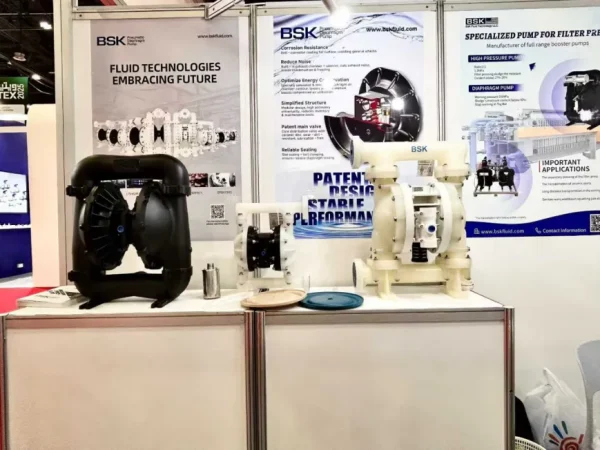
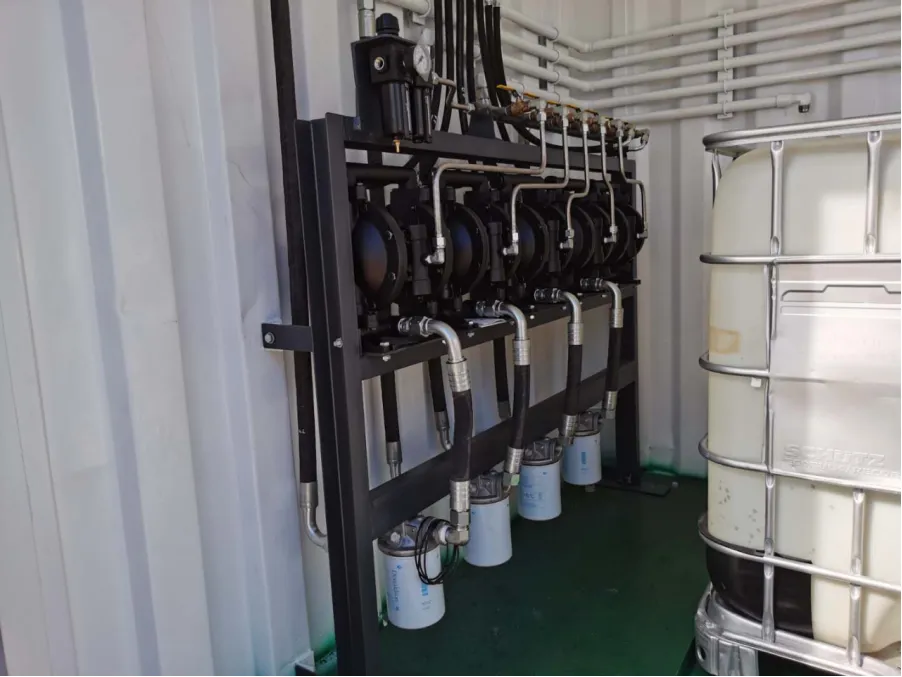
A leading heavy machinery manufacturer in East China recently overcame long-standing lubricant conveying challenges by adopting BSK’s pneumatic diaphragm pumps, achieving smoother production workflows, reduced oil waste, and lower maintenance costs. This case highlights how BSK’s tailored fluid handling solutions address the unique demands of lubricant (e.g., gear oil, hydraulic oil) transportation in industrial settings—where viscosity, oil quality preservation, and equipment reliability are critical.
The Challenge: Traditional Pumps Fail to Meet Lubricant Conveying Needs
The manufacturer’s production line requires conveying various high-viscosity lubricants (200-1500 cSt) from storage tanks to machinery lubrication points and assembly stations. Prior to using BSK pumps, they relied on electric gear pumps and centrifugal pumps, which created persistent issues. First, high-viscosity lubricants often caused electric gear pumps to “seize” or deliver uneven flow—especially in low-temperature winter conditions—leading to delayed machinery lubrication and increased wear on production equipment. Second, centrifugal pumps generated high shear forces during operation, breaking down lubricant molecular structures and accelerating oil oxidation; this shortened the lubricant’s service life by 20% and raised replacement costs. Additionally, shaft seals on traditional pumps wore quickly due to the lubricant’s adhesive properties, resulting in frequent oil leaks that contaminated workstations and required monthly seal replacements, disrupting 24/7 production schedules.
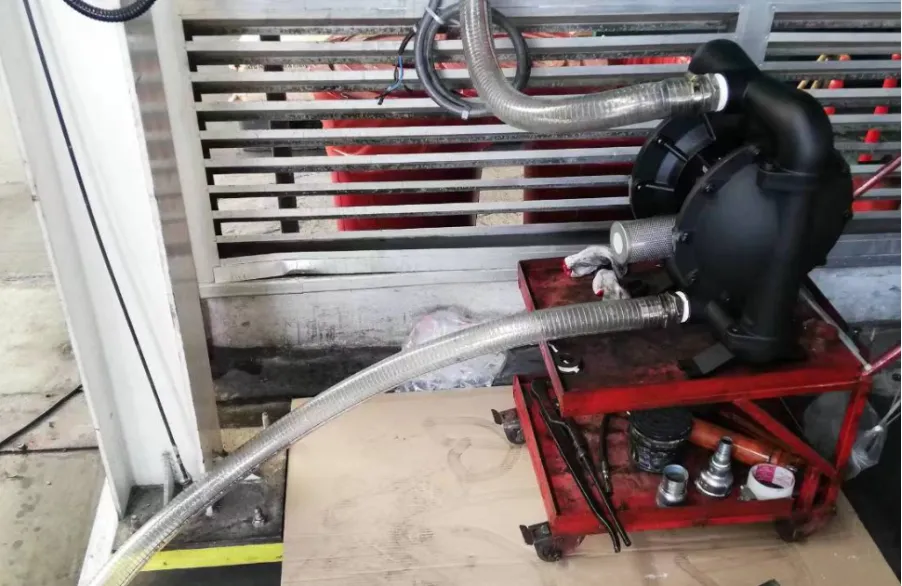
The Solution: BSK Pneumatic Diaphragm Pumps’ Targeted Design
After evaluating multiple options, the manufacturer selected BSK’s L-series pneumatic diaphragm pumps—engineered specifically for viscous, oil-based media—with designs that addressed each pain point directly.
For high-viscosity lubricant conveying, BSK’s pump uses compressed air drive, allowing flexible adjustment of pressure and flow rate without relying on high-speed rotating parts. Even for 1500 cSt gear oil (at 10°C), the pump maintains steady flow by expanding the diaphragm to create gentle suction and discharge, eliminating “seizure” issues and ensuring consistent lubricant supply to machinery. To preserve lubricant quality, the pump’s diaphragm-driven mechanism avoids the turbulent flow of centrifugal pumps, creating a smooth, pulsation-free conveying process that minimizes shear force on lubricants. This preserves the stability of lubricant additives and molecular structure; post-application testing showed the lubricant’s service life extended back to its original 6-month cycle, cutting replacement costs significantly.
The pump also features a “shaft seal-free + diaphragm isolation” design, where lubricant never comes into contact with drive components—eliminating seal wear and oil leaks entirely. Its modular construction reduces wearable parts to just three (diaphragm, valve ball, seal ring), and replacements take less than 30 minutes without specialized tools, dropping maintenance frequency from once a month to once every 6 months. Additionally, wetted parts are made of 304 stainless steel and nitrile rubber, both resistant to swelling or corrosion from mineral oils, synthetic lubricants, and additives, ensuring long-term reliability without contaminating the lubricant.
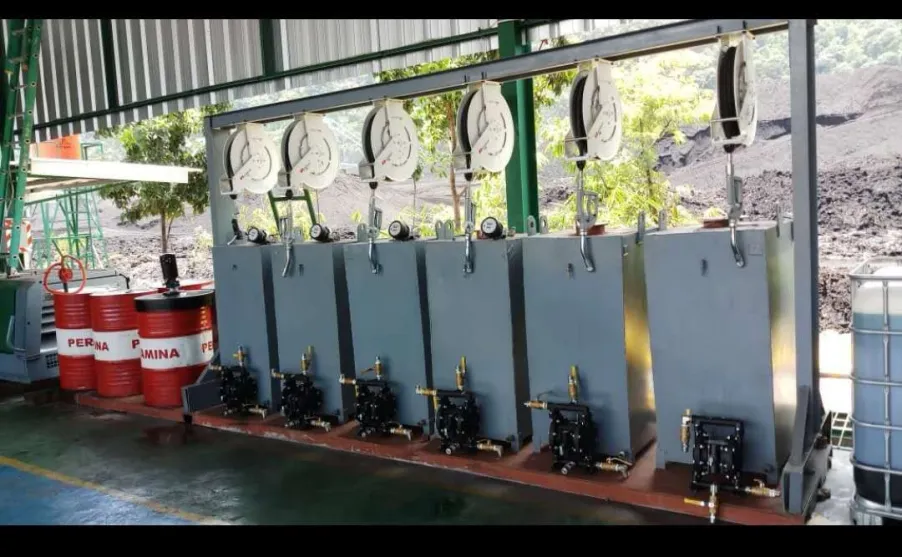
The Outcome: Efficiency Gains & Cost Savings
Since integrating BSK pumps into the production line 6 months ago, the manufacturer has seen measurable improvements. Conveying reliability has been fully guaranteed—there have been zero pump seizures or flow interruptions, even in winter low-temperature conditions. Lubricant replacement costs have dropped by 20% thanks to extended service life. Maintenance efficiency has also improved dramatically: maintenance time has been reduced by 83% (from 8 hours/month to 1.3 hours/month) and spare parts expenses have fallen by 50%. Meanwhile, the elimination of oil leaks has improved workshop safety and reduced the workload of cleaning contaminated areas.
Why BSK Stands Out for Lubricant Conveying
Lubricant conveying requires a balance of “gentle handling” (to protect oil quality) and “reliable performance” (to support industrial workflows)—a balance BSK’s pneumatic diaphragm pumps achieve through air-driven flexibility, low-shear design, and leak-free structure. Beyond heavy machinery, BSK pumps are also widely used in automotive manufacturing (engine oil filling), wind power (gearbox lubricant transfer), and industrial gearboxes (lubricant circulation)—adapting to diverse lubricant types and application scenarios.
For businesses struggling with lubricant conveying inefficiencies, BSK’s tailored solutions offer a path to smoother operations, lower costs, and longer equipment life.
Explore BSK Pneumatic Diaphragm Pumps
Looking for the right AODD pump for your application? BSK Fluid Technology offers a complete range of pneumatic diaphragm pumps in aluminum, stainless steel, cast iron, PP, and PVDF. With 30+ years of manufacturing expertise and patented ceramic air valve technology, we deliver reliable fluid transfer solutions worldwide.
Frequently Asked Questions
When should I choose PTFE vs Santoprene diaphragms?
Choose PTFE for strong acids, aggressive solvents, high-purity or temperatures above 80°C (shorter flex life, higher cost). Choose Santoprene for mildly corrosive/neutral fluids, longer diaphragm life (2-3x vs PTFE), food-grade use and cost efficiency.
Can BSK pumps handle food-grade and sanitary applications?
Yes. BSK sanitary AODD pumps feature a 316L body with electropolished finish (Ra ≤ 0.8 μm), tri-clamp connections for CIP, FDA-compliant diaphragms, and no dead legs for complete drainage. They are used in dairy, beverages, sauces, edible oils and chocolate transfer.
Are BSK pumps suitable for explosive / ATEX environments?
Yes. AODD pumps are powered by compressed air with no electricity, making them inherently safe for ATEX Zone 1/2 (gas) and Zone 21/22 (dust). For ATEX compliance use a conductive grounded metallic body or PTFE diaphragms with conductive additive for plastic bodies, and route the air exhaust to a safe area.
Why choose an AODD pump instead of a centrifugal pump?
AODD pumps excel with high-viscosity fluids (up to 10,000 cP), abrasive slurries and shear-sensitive liquids. They run dry without damage, are self-priming, handle solids up to 6mm, and are safe for explosive environments with no electricity. Centrifugal pumps suit very high flow (>1000 L/min) or high pressure (>10 bar).
Where can I get a quote for the right AODD pump for my application?
BSK Fluid Technology engineers provide a personalized pump selection within 24 hours. Share your fluid properties, flow rate and pressure requirements via the Contact page or WhatsApp +86-134-3105-8937, and we will recommend the optimal model from our aluminum, stainless steel, cast iron, PP and PVDF AODD range.


