
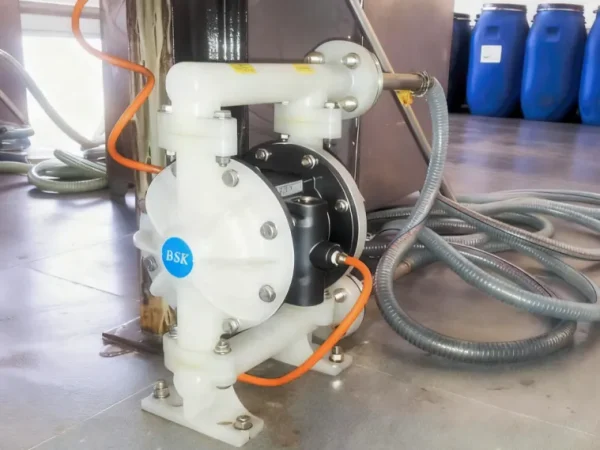
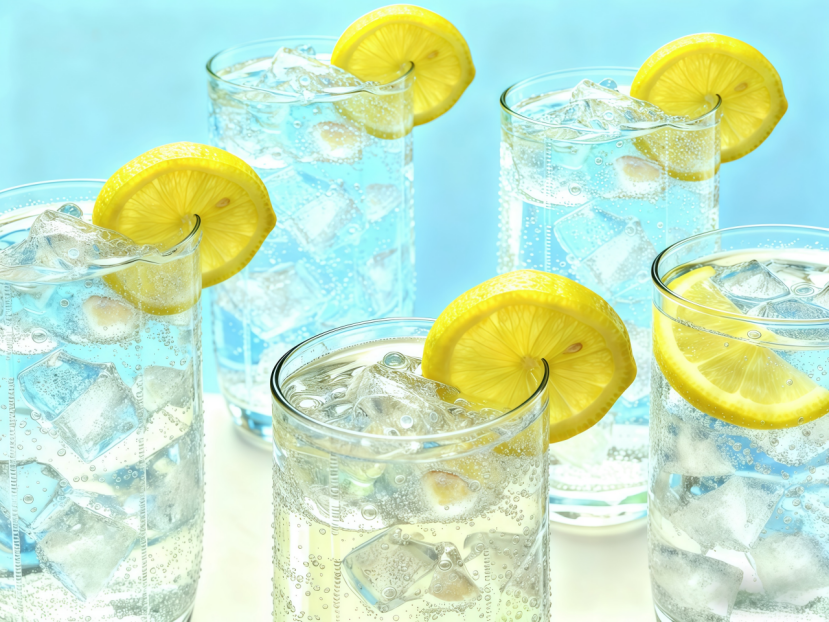
Sparkling water has become a staple in global beverage markets, valued for its crisp texture, zero additives, and versatile pairing potential. The production process hinges on two non-negotiable priorities: maintaining stable carbonation levels (the “fizz” that defines the product) and upholding rigorous hygiene standards to ensure water purity. For a mid-sized European sparkling water manufacturer, traditional centrifugal pumps were undermining both goals—causing excessive CO₂ loss, unwanted foaming, and compliance risks. The adoption of BSK food-grade pneumatic diaphragm pumps transformed their production line, resolving these critical pain points while enhancing operational flexibility.
Core Challenges in Sparkling Water Conveyance
Sparkling water’s unique composition—purified water infused with dissolved CO₂—presents distinct challenges for transfer equipment. The manufacturer faced three recurring issues with conventional pumps:
1. CO₂ Loss and Compromised Texture
Centrifugal pumps rely on high-speed rotating impellers, which generate shear forces and pressure fluctuations. This disrupted the delicate balance between CO₂ and water (governed by Henry’s Law) , causing dissolved gas to escape as bubbles. The result was inconsistent carbonation—some batches felt “flat” while others had uneven fizz—leading to customer complaints and product waste.
2. Excessive Foaming and Filling Inefficiencies
Turbulent flow from traditional pumps created significant foam during transfer to filling lines. This not only slowed down the counter-pressure filling process but also increased product rejection rates, as foamy batches failed to meet the brand’s quality standards for clarity and carbonation consistency.
3. Hygiene Compliance Risks
Sparkling water’s minimal ingredient list (often just water and CO₂) means any contamination is immediately noticeable. The manufacturer’s old pumps had hard-to-clean crevices and mechanical seals that wore over time, creating potential harborage points for bacteria. This posed risks of non-compliance with FDA and EHEDG food safety standards, critical for market access.

BSK’s Tailored Solution for Sparkling Water Production
BSK’s food-grade pneumatic diaphragm pumps were engineered to address the unique demands of carbonated beverage conveyance, with three key design optimizations:
1. Low-Shear Flow to Preserve Carbonation
Unlike centrifugal pumps, BSK’s air-driven reciprocating mechanism creates a gentle, pulse-controlled flow with minimal shear force. The wide, smooth flow channels eliminate turbulence, preventing CO₂ from separating from the water matrix . This design ensures that the sparkling water retains its intended carbonation level—from the carbonator to the filling nozzle—delivering consistent fizz in every bottle.
2. Foam Reduction and Stable Pressure Control
BSK pumps feature adjustable air pressure regulation, allowing operators to fine-tune flow rates to match the filling line’s requirements. The steady, non-turbulent flow minimizes foam formation, seamlessly integrating with counter-pressure filling systems to reduce product waste and speed up production cycles. The self-priming capability also eliminates the need for priming fluids, preventing cross-contamination and further reducing foam.
3. Hygienic Design for Purity and Compliance
All wetted components of BSK pumps are crafted from 316L stainless steel with electropolished surfaces (Ra < 0.8μm) and FDA-approved EPDM or PTFE diaphragms. The clamp-on assembly enables tool-free disassembly, while the dead-space-free internal structure prevents bacterial buildup . This design supports efficient Clean-in-Place (CIP) processes, ensuring compliance with strict hygiene standards and eliminating contamination risks.
4. Cold Compatibility for Refrigerated Production
Sparkling water is often processed and stored at low temperatures (4–10℃) to enhance carbonation stability. BSK pumps are engineered with cold-resistant materials and lubrication-free air distributors, ensuring reliable performance in chilled environments without compromising seal integrity or flow consistency.

Transformative Results for the Manufacturer
After integrating BSK pneumatic diaphragm pumps into their production line, the manufacturer experienced tangible improvements across key metrics:
Consistent Carbonation: CO₂ retention rates improved significantly, with all batches meeting the target carbonation range (2.0–3.0 volumes) , eliminating customer complaints about inconsistent fizz.
Reduced Waste: Foam-related product rejection rates dropped sharply, cutting material waste and lowering production costs.
Simplified Compliance: The hygienic design streamlined CIP processes and passed third-party audits with ease, ensuring ongoing adherence to FDA and EHEDG standards.
Operational Flexibility: Adjustable flow rates allowed the manufacturer to switch between different bottle sizes (330mL to 2L) without reconfiguring equipment, enhancing production versatility.
Beyond Sparkling Water: Versatility in Carbonated Beverages
BSK’s solution isn’t limited to plain sparkling water—it also excels in conveying other carbonated beverages, including:
Flavored sparkling waters with natural extracts
Craft sodas and artisanal carbonated drinks
Low-sugar or zero-calorie carbonated beverages
The pump’s ability to handle shear-sensitive, foam-prone liquids makes it a valuable asset for any beverage producer prioritizing product quality and operational efficiency.
Sparkling water’s success depends on preserving its core attributes—purity and fizz. BSK pneumatic diaphragm pumps deliver on both, combining gentle conveyance, hygienic design, and operational flexibility to support consistent, high-quality production.
Reach out to the BSK team today to explore how our tailored pumping solutions can elevate your sparkling water or carbonated beverage production.
Explore BSK Pneumatic Diaphragm Pumps
Looking for the right AODD pump for your application? BSK Fluid Technology offers a complete range of pneumatic diaphragm pumps in aluminum, stainless steel, cast iron, PP, and PVDF. With 30+ years of manufacturing expertise and patented ceramic air valve technology, we deliver reliable fluid transfer solutions worldwide.
Frequently Asked Questions
Are BSK pumps suitable for explosive / ATEX environments?
Yes. AODD pumps are powered by compressed air with no electricity, making them inherently safe for ATEX Zone 1/2 (gas) and Zone 21/22 (dust). For ATEX compliance use a conductive grounded metallic body or PTFE diaphragms with conductive additive for plastic bodies, and route the air exhaust to a safe area.
Why choose an AODD pump instead of a centrifugal pump?
AODD pumps excel with high-viscosity fluids (up to 10,000 cP), abrasive slurries and shear-sensitive liquids. They run dry without damage, are self-priming, handle solids up to 6mm, and are safe for explosive environments with no electricity. Centrifugal pumps suit very high flow (>1000 L/min) or high pressure (>10 bar).
What industries use AODD pumps?
AODD pumps are used in chemical processing, food & beverage (dairy, wine, CIP), painting & coating, ceramics & mining (slurries, glazes), pharmaceuticals, oil & gas, water treatment, electronics, automotive, and pulp & paper. Their ability to handle abrasives, solvents and shear-sensitive fluids makes them ideal across these sectors.
What pump body materials are available?
BSK offers five body materials: Aluminum alloy (general purpose, oils), Stainless steel 316 (corrosive chemicals, food, pharma), Cast iron (low-cost industrial, wastewater), Polypropylene/PP (acids, alkalis, lightweight), and PVDF (strong acids, solvents, high-purity).
Where can I get a quote for the right AODD pump for my application?
BSK Fluid Technology engineers provide a personalized pump selection within 24 hours. Share your fluid properties, flow rate and pressure requirements via the Contact page or WhatsApp +86-134-3105-8937, and we will recommend the optimal model from our aluminum, stainless steel, cast iron, PP and PVDF AODD range.


