
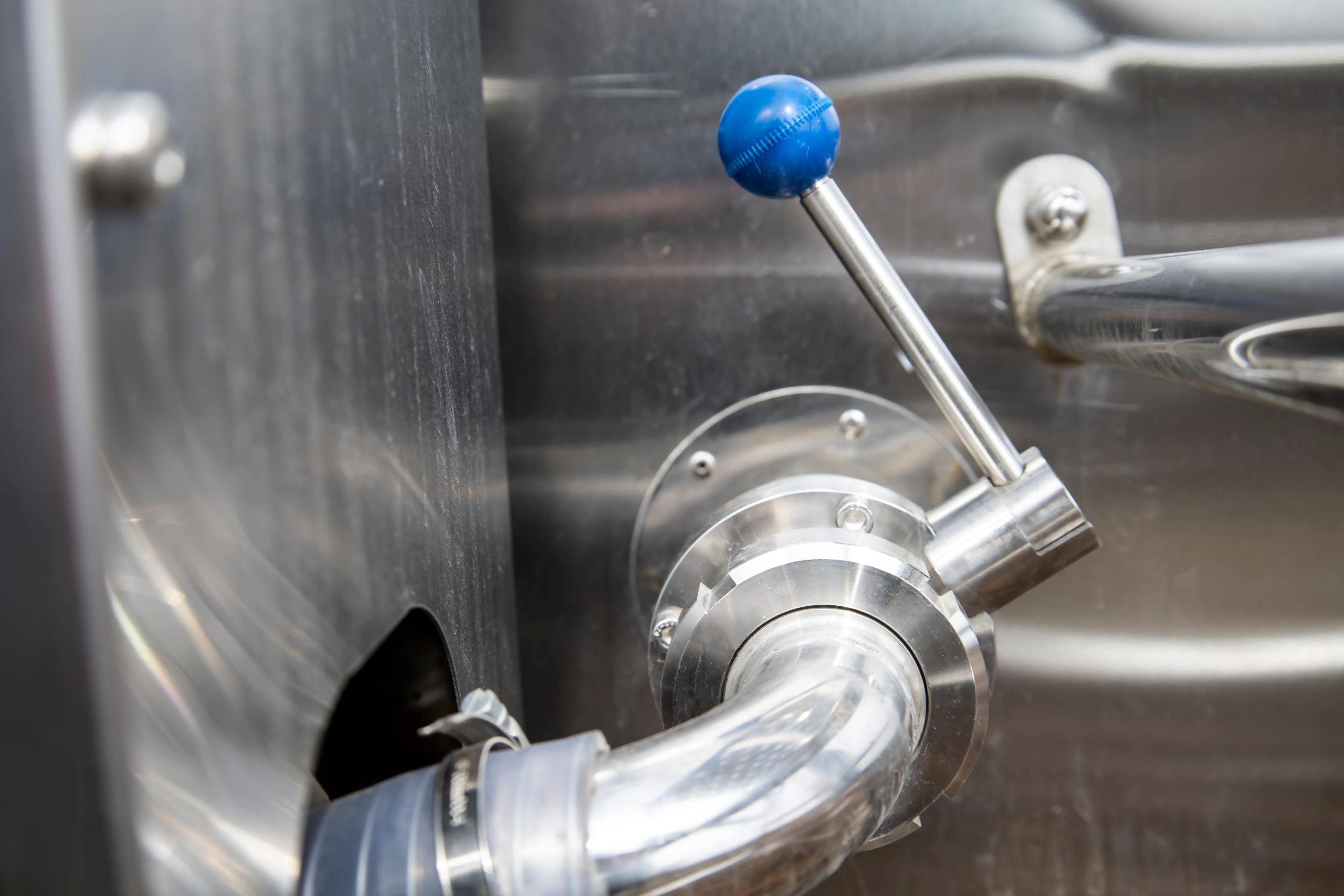
Cleanliness in the food service industry isn’t just good practice — it is the law. From the processing to the packaging, every stage in between has to meet high standards of hygiene to protect consumers from contamination and ensure the quality of the product. That is where the role of the sanitation pump comes in. This important equipment keeps systems clean, safe, and running. But you can’t just use any pump.
You need a compliant sanitation pump — an FDA and industry-compliant pump.
Why is compliance so important, then? And how can the right sanitation pump affect the operation and safety of your facility? Take a closer look with us.
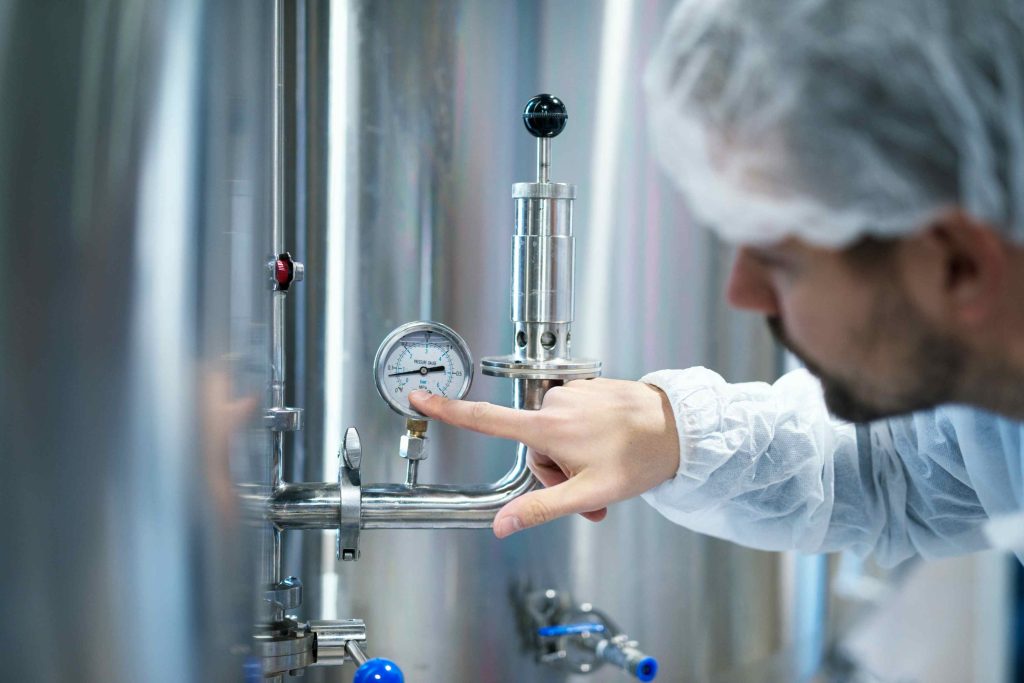
What Is a Sanitation Pump and Why Is It Important?
You are wondering, perhaps, about a sanitation pump. It is simply a pump that transfers liquids — juices, sauces, or even dairy — in a way that keeps them in a hygienic condition and away from contamination. Sanitation pumps are designed with high hygiene standards in mind, especially in industries where the integrity of the products is at the top of the list.
The Role of a Sanitation Pump in Food Processing
In food and drink facilities, a sanitary pump is a critical component in the transport of raw and finished goods. From filling bottles of yogurt to assisting in circulating cleaners in a CIP (clean-in-place) system, the pump needs to perform without introducing bacteria or particles. The pump components must be smooth, cleanable, and corrosion-resistant.
When a single component within the system is not at the level of hygiene, the whole item may be ruined. Due to this, there are specially designed pumps that are utilized, not regular pumps, to maintain the integrity of the item along with the efficiency of the process.
A Sanitation Pump Guarantees Product Safety
A sanitation-grade pump is made with food-grade materials like 316L stainless steel, free of cracks or hidden recesses, and is designed to drain to the bottom. There is nowhere for germs to reside. The pump is designed to withstand high-pressure hot washing, which provides for more efficient sanitizing for your staff.
Wondering why that is significant? Let’s look at the regulations that all sanitation pumps must follow.
Understanding Sanitation Pump Compliance Regulations
In food processing facilities or the food and drink industry, to be clean is not sufficient — you have to prove it. That is why there are compliance standards. Your plant is likely to have serious problems with inspections or audits should your sanitation pump be below standard.
Major Standards: FDA, 3-A, and More
The leading standard in the U.S. is that set forth by the FDA. It requires that equipment that comes into contact with food should be made of food-safe, non-toxic materials that won’t corrode or weaken over time. The pump itself should also be easy to sanitize, have smooth surfaces, and have no crevices where bacteria have room to grow.
Another commonly used standard is the 3-A Sanitary Standards. These are even more stringent, requiring special design elements like drainability, weld quality, and cleanability. Some buyers in the food and beverage industry require FDA and 3-A compliance for added assurance.
Why Food and Beverage Businesses Can’t Ignore Them
Compliance is not something to check a box for — compliance is protection. A compliant sanitation pump is shielding you from recalls, fines, and even shutdowns. With so much at risk, the temptation is not worth the risk of running a non-compliant pump.
So what happens when a pump does not abide by these? Find out next.
The Dangers of Using a Non-Compliant Sanitation Pump
Running the wrong pump can save you money now, but ultimately cost you dearly. The pumps that are not compliant are not made to achieve the high level of hygiene that a food or drink plant requires. In the worst case, the implications are severe.
Real Risks: Shutdowns, Contaminations, and Recalls
Bacteria like damp, dark environments. If your pump is broken or can’t be drained, that is the perfect hiding spot for germs. That would contaminate your product — unknowingly, people can begin to become ill.
A single tainted lot can lead to a recall, which is a multimillion-dollar endeavor, to say nothing of the reputational loss to your brand. Your plant may have to close shop in extreme cases until everything is righted by the health authorities.
Financial and Legal Ramifications
Aside from recall and plant shutdown, the use of a non-compliant sanitation pump also invites lawsuits and litigation. If it is discovered that the plant had not been FDA-compliant, your company might have to pay hefty fines or face litigation — particularly if consumers have already been negatively affected.
All this trouble can be avoided. It begins with the selection of the right equipment.
What Makes BSK’s Sanitation Pump Stand Out?
There are a variety of pumps to choose from, but not everyone is the same. BSK’s FDA Sanitation Pump was designed with a single goal in mind: to maintain food and drink facilities clean, compliant, and productive.
Built for Performance and Peace of Mind
The BSK sanitation pump is made from FDA-grade corrosion-resistant 316L stainless steel. The pump is also entirely drainable and easy to sanitize, with nowhere for bacteria to form. The pump is also capable of CIP and has an electropolished smooth surface.
Not only is it compliant – it is made for every day, real-life applications. Whether pumping thick sauces, dairy or cleaning solutions, the pump can handle them without malfunctioning or losing efficiency.
Features That Make Compliance Easier
As compared to other pumps that require tools for disassembly, BSK is toolless so that your staff can readily check and sanitize it. It also has FDA and 3-A compliant sanitary gaskets and seals.
Do you require customization? BSK offers that too, so getting the pump that is best for your specific operation — pressure to flow — is now simpler.
You’re probably thinking, “That sounds good — but how does that benefit my bottom line?” We’ll address that.
How a Sanitation Pump Saves Time, Money, and Trouble
Compliance is critical but not the only reason for the right selection of the pump. A good sanitation pump also helps to keep your facility running cleaner, smoother, and more efficiently.
Less Maintenance, Faster Cleaning
Since the BSK pump is so easy to sanitize, your staff can spend less time on cleaning and more time making products. That translates to less downtime, faster turnarounds, and less labor costs. With fewer failures, repair costs decrease too.
And never compromise on safety. A properly designed sanitation pump reduces the possibility of the operator being hurt while sanitizing and performing maintenance.
Long-Term Returns And ROI
Think of a compliant pump as an investment, not a purchase. It pays for itself over time in the following ways:
- Avoid shutdowns and penalties
- Less cleaning and maintenance expense
- Improving product quality
- Extend equipment lifespan
- Pass audits with ease.
By selecting a compliant, high-grade pump to begin with, you position your plant for long-term success.
Bottom Line
The food and beverages industry is always on the move, and the necessity to comply, stay safe, and be clean only grows stronger. A compliant sanitation pump is not just a piece of equipment. It is an integral part of your business system. It protects your product, reputation, people, and bottom line.
So whether you are retrofiting an established line or starting a brand new line, for goodness’ sake, don’t cut corners on sanitation. The risk is too high, the reward for doing it right is too large.
Ready to modernize with a dependable, FDA-approved sanitation pump for your plant? Contact BSK to learn more.
FREQUENTLY ASKED QUESTIONS
1. What is a sanitation pump?
A sanitation pump is a particular type of pump utilized in food and beverage facilities to transport liquids safely along with satisfying hygiene and cleanliness requirements.
2. Why is a sanitation pump important in food production?
It keeps the products free from contamination, ensures their safety, and facilitates compliance with industry and FDA requirements.
3. What makes a sanitation pump “compliant”?
A compliant pump is made of FDA-compliant materials, is easy to sanitize, is thoroughly drainable, and is overall 3-A sanitary compliant.
4. How many times should a sanitation pump be cleaned?
It depends on the application, but most pumps are cleaned every day either manually or by way of a CIP.
5. What are the best materials for sanitation pumps?
316L stainless steel is most commonly utilized since it is corrosion-resistant, has no toxicity, and is simple to clean.
6. What happens if the sanitation pump is not compliant?
A pump that is not compliant can lead to product contamination, costly recalls, failed inspections, or even plant closures.
7. Is the BSK sanitation pump customizable?
Yes, BSK offers customization to meet your specific process requirements and flow needs.
8. Is the BSK sanitation pump FDA-approved?
Yes, the BSK sanitation pump is made of FDA-approved material and design, and it comes with 3-A certification.
9. What does a sanitation pump help with in food safety audits?
Briefing makes compliance easier, promotes successful inspections, and reduces documentation problems with its sanitary design.
10. Where is a good place to buy a sanitation pump?
You can contact BSK directly to inquire more or request a quote.
Explore BSK Pneumatic Diaphragm Pumps
Looking for the right AODD pump for your application? BSK Fluid Technology offers a complete range of pneumatic diaphragm pumps in aluminum, stainless steel, cast iron, PP, and PVDF. With 30+ years of manufacturing expertise and patented ceramic air valve technology, we deliver reliable fluid transfer solutions worldwide.
Frequently Asked Questions
What pump body materials are available?
BSK offers five body materials: Aluminum alloy (general purpose, oils), Stainless steel 316 (corrosive chemicals, food, pharma), Cast iron (low-cost industrial, wastewater), Polypropylene/PP (acids, alkalis, lightweight), and PVDF (strong acids, solvents, high-purity).
When should I choose PTFE vs Santoprene diaphragms?
Choose PTFE for strong acids, aggressive solvents, high-purity or temperatures above 80°C (shorter flex life, higher cost). Choose Santoprene for mildly corrosive/neutral fluids, longer diaphragm life (2-3x vs PTFE), food-grade use and cost efficiency.
Can BSK pumps handle food-grade and sanitary applications?
Yes. BSK sanitary AODD pumps feature a 316L body with electropolished finish (Ra ≤ 0.8 μm), tri-clamp connections for CIP, FDA-compliant diaphragms, and no dead legs for complete drainage. They are used in dairy, beverages, sauces, edible oils and chocolate transfer.
Are BSK pumps suitable for explosive / ATEX environments?
Yes. AODD pumps are powered by compressed air with no electricity, making them inherently safe for ATEX Zone 1/2 (gas) and Zone 21/22 (dust). For ATEX compliance use a conductive grounded metallic body or PTFE diaphragms with conductive additive for plastic bodies, and route the air exhaust to a safe area.
Where can I get a quote for the right AODD pump for my application?
BSK Fluid Technology engineers provide a personalized pump selection within 24 hours. Share your fluid properties, flow rate and pressure requirements via the Contact page or WhatsApp +86-134-3105-8937, and we will recommend the optimal model from our aluminum, stainless steel, cast iron, PP and PVDF AODD range.


