
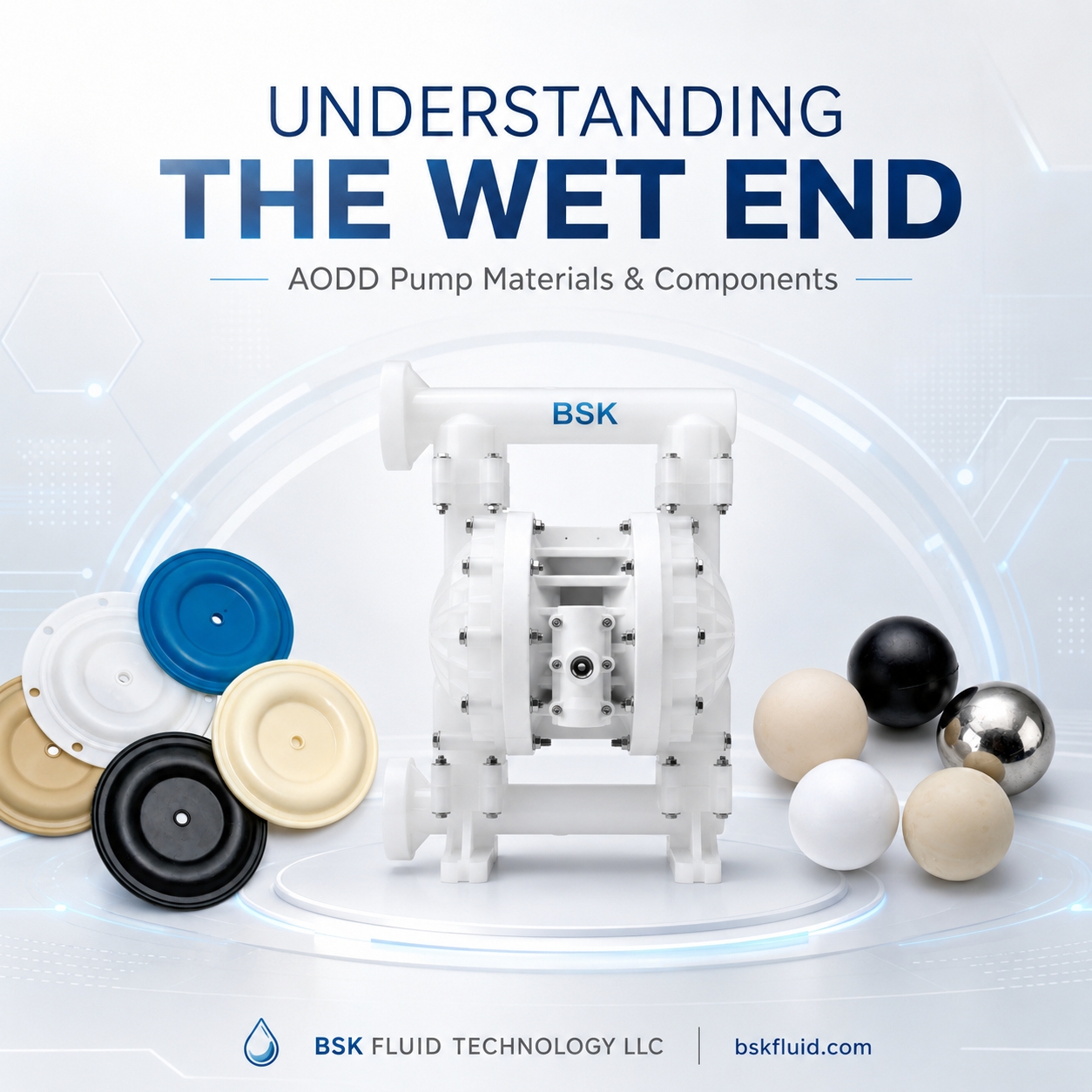
In an air-operated double-diaphragm (AODD) pump, the wet end is the part of the pump that directly contacts the transferred fluid. For buyers and engineers, understanding this area is more than a technical detail. The wet end determines which fluids the pump can handle, how the pump responds to corrosion or abrasion, how easily it can be maintained, and which spare parts should be reviewed before ordering.
AODD pumps are often selected for chemical transfer, wastewater handling, slurry movement, paint and coating production, sanitary transfer, and many general industrial fluid duties. In each case, the pump may look similar from the outside, but the correct wet-end configuration can be very different. The fluid name, concentration, viscosity, solids content, temperature, and installation environment should all be checked before a final pump recommendation is made.
What Parts Are Included in the Wet End?
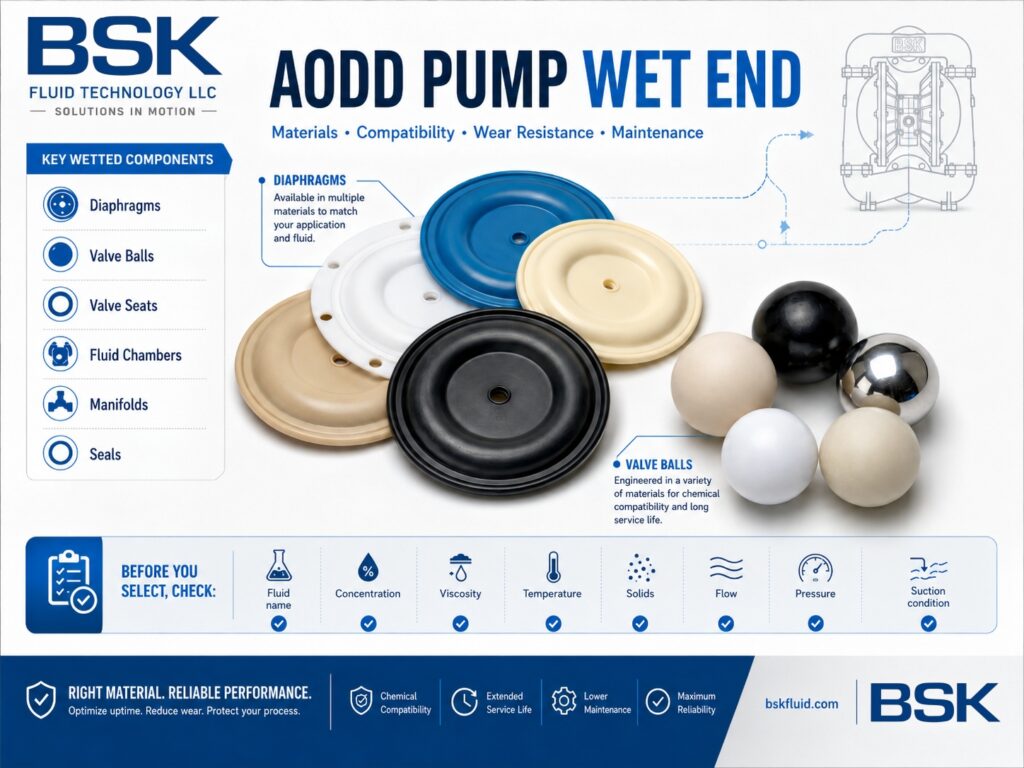
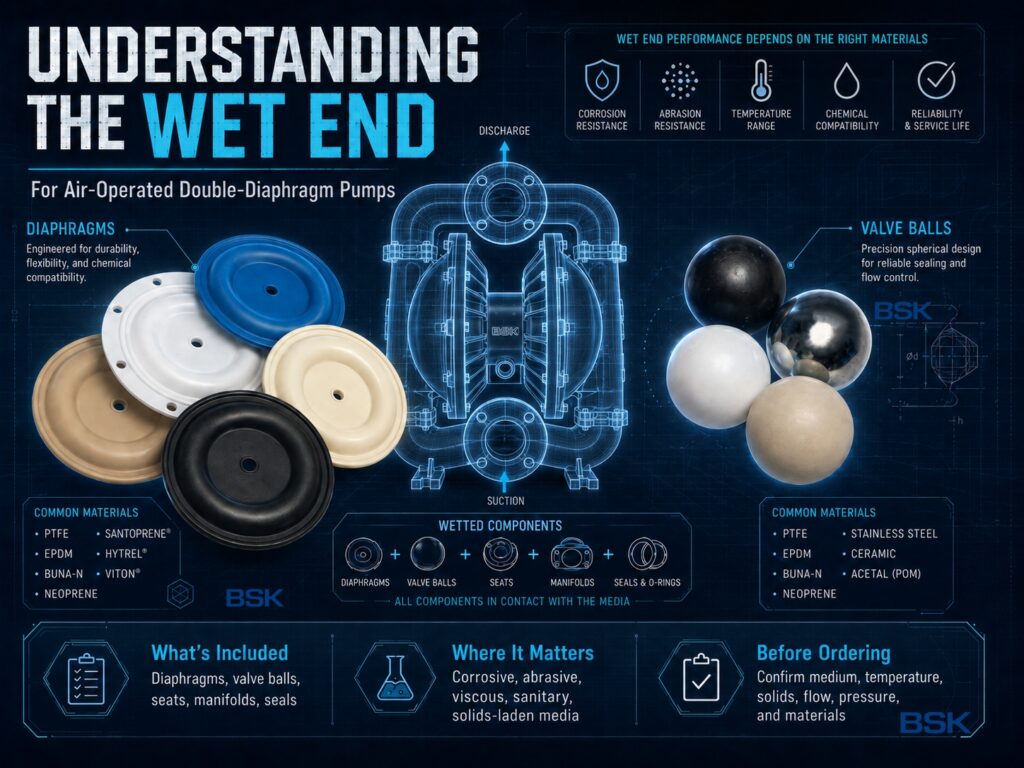
The wet end normally includes every component that touches the pumped medium. In a typical AODD pump, this includes the pump body or fluid chambers, diaphragms, valve balls, valve seats, manifolds, seals, and related wetted fasteners or connection areas. These parts work together to create the pumping path while the air motor drives the diaphragms from the non-wetted side.
The diaphragm is especially important because it separates the pumped fluid from the air-drive section. Valve balls and seats control the opening and closing of the flow path as the diaphragms move. Manifolds and fluid chambers guide the medium through the suction and discharge sides. If any of these components is poorly matched to the fluid, the result may be leakage, swelling, early wear, unstable flow, or difficult maintenance.
Where Wet-End Decisions Matter Most
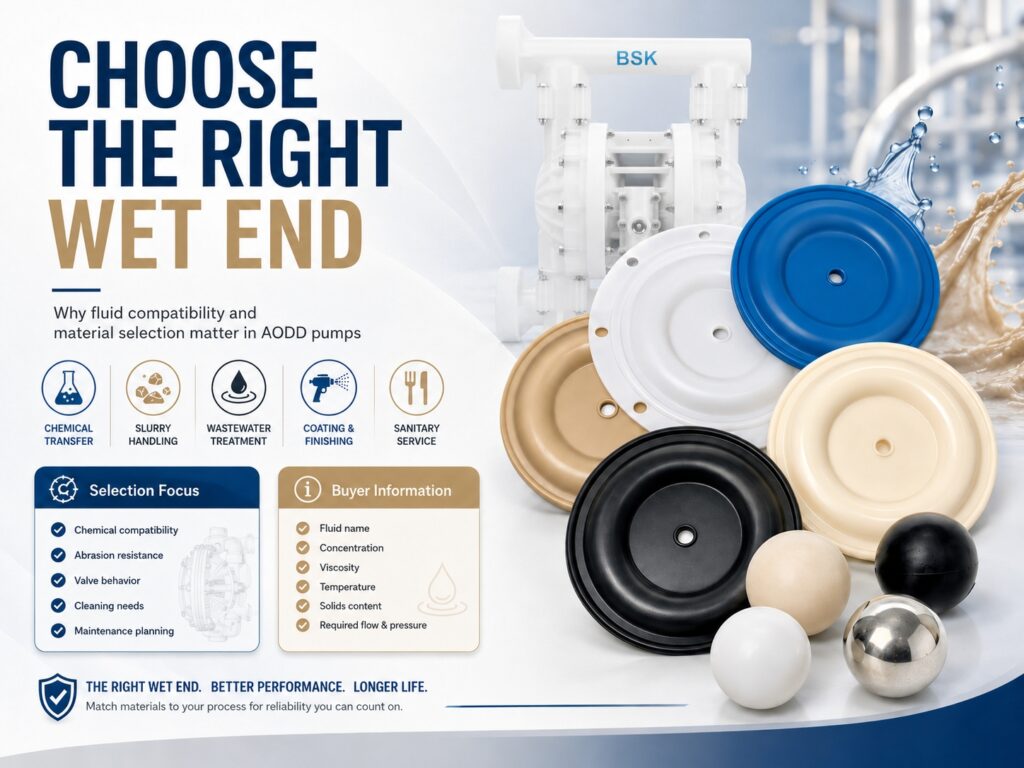
Wet-end selection matters in almost every application, but it becomes critical when the medium is corrosive, abrasive, viscous, sticky, sanitary, or solids-laden. In chemical transfer, the first concern is usually compatibility between the fluid and wetted materials. A pump-body material that works for one chemical may not be suitable for another chemical at a different concentration or temperature.
In wastewater and slurry service, abrasion and solids can affect diaphragms, valve balls, and valve seats. In paint, ink, coating, or lubricant transfer, viscosity and cleaning requirements may influence valve behavior and maintenance planning. In sanitary applications, the flow path, connection style, cleaning method, and wetted materials require additional review. These examples show why wet-end selection should start with the real medium and working conditions, not only with connection size or pump appearance.
Common Problems Caused by the Wrong Wet-End Choice
A mismatch in wet-end materials can create several practical problems on site. Corrosive fluids may attack unsuitable pump-body or sealing materials. Abrasive slurry can shorten the service life of diaphragms, valve balls, or seats. Sticky or high-viscosity fluids may cause poor valve seating, slower cycling, or incomplete discharge if the configuration is not reviewed correctly.
Another common issue is assuming that one diaphragm material is suitable for all fluids. PTFE, Santoprene, NBR, FKM, PU, Silicone, and other materials may appear in pump selection discussions, but the correct choice depends on the actual fluid, temperature, concentration, and operating pattern. The same caution applies to valve balls and seats. Their material and design should be confirmed according to the medium and expected duty.
Key Information Buyers Should Confirm
Before ordering an AODD pump, buyers should provide a clear description of the fluid and duty conditions. Useful information includes the fluid name and composition, concentration, viscosity, temperature, solids content, particle characteristics, corrosiveness, required flow, discharge pressure or head, suction condition, piping size, working environment, and whether the pump will run continuously or intermittently.
If the application has cleaning, sanitary, or material-documentation requirements, these should be stated early. If the pump will handle abrasive slurry, the buyer should explain the type and approximate nature of the solids. If the fluid is chemically aggressive, material compatibility should be checked for all wetted components, not only the pump body. A good wet-end review looks at the complete fluid path.
Material and Configuration Considerations
BSK product information covers pneumatic diaphragm pump solutions with material options such as polypropylene, aluminum alloy, stainless steel, and cast iron for different industrial uses. Diaphragm, valve, seat, and sealing options may include materials such as PTFE, Santoprene, NBR, FKM, PU, Silicone, stainless steel, or ceramic depending on the pump series and application. These options should not be treated as universal answers. They should be confirmed according to the actual fluid and working conditions.
For corrosive fluids, the selection usually starts with chemical compatibility and then checks mechanical duty. For abrasive or solids-laden media, buyers should consider not only corrosion resistance but also wear behavior and valve configuration. For sanitary transfer, the discussion may include a sanitary diaphragm pump, connection type, flow path, cleaning approach, and whether a ball-check or flap-check configuration is more suitable for the medium.
Common Selection Mistakes
One common mistake is selecting an AODD pump only by inlet and outlet size. Connection size is important, but it does not confirm chemical compatibility, abrasion resistance, viscosity behavior, or valve suitability. Another mistake is choosing a pump body material while ignoring diaphragms, valve balls, valve seats, and seals. The pumped fluid touches the full wet end, so the full path should be reviewed.
A third mistake is copying a configuration from another application without checking the details. Two fluids may share an industry name but differ in concentration, temperature, solids, additives, or cleaning process. A configuration that works in one plant may need adjustment in another. Buyers should also avoid relying on unverified performance claims or assuming that a material option means a complete pump certification.
How BSK Can Support Your Selection
BSK Fluid Technology LLC. develops and supplies pneumatic diaphragm pump solutions for industrial fluid handling. For wet-end selection, BSK can help review the medium, operating conditions, wetted materials, valve configuration, and maintenance requirements before model selection. This support is especially useful when the fluid is corrosive, abrasive, viscous, sanitary, or difficult to describe with a simple product name.
To start a selection discussion, share the fluid name, concentration, viscosity, temperature, solids information, required flow, pressure or head, suction condition, piping arrangement, and preferred wetted materials. With this information, the BSK team can discuss a suitable AODD pump configuration and help reduce avoidable selection risks.
Conclusion
The wet end is the part of an AODD pump where fluid compatibility, wear resistance, valve behavior, cleaning needs, and maintenance planning come together. A careful wet-end review helps buyers move beyond basic pump size and focus on the real conditions that affect pump performance and service life.
When selecting a pneumatic diaphragm pump, do not treat the wet end as a secondary detail. Review the complete fluid path and confirm each wetted component according to the medium and working conditions. For application-specific guidance, contact BSK pump. and provide your operating data for pump-selection and material-selection support.
Explore BSK Pneumatic Diaphragm Pumps
Looking for the right AODD pump for your application? BSK Fluid Technology offers a complete range of pneumatic diaphragm pumps in aluminum, stainless steel, cast iron, PP, and PVDF. With 30+ years of manufacturing expertise and patented ceramic air valve technology, we deliver reliable fluid transfer solutions worldwide.
Frequently Asked Questions
Can an AODD pump run dry without damage?
Yes. AODD pumps can run dry indefinitely without damage, unlike centrifugal pumps that suffer seal failure. Prolonged dry running does accelerate diaphragm wear, so we recommend a liquid-level sensor or timer to stop the air supply when the source is empty.
How can I control the flow rate of an AODD pump?
Flow is controlled by adjusting air pressure (simplest), installing a needle valve on the air supply, throttling the discharge valve (AODD pumps can dead-head safely), or using a solenoid valve with a PLC for batch dosing. Never throttle the suction side, as this causes cavitation.
What is an air-operated double diaphragm (AODD) pump?
An AODD pump is a positive displacement pump powered by compressed air. Two flexible diaphragms connected by a common shaft are driven back and forth by an air valve. When one diaphragm pushes fluid out, the other draws fluid in, creating continuous flow. AODD pumps are self-priming, can run dry, need no electricity, and handle a wide range of viscosities and solids.
How do I select the right AODD pump size (flow rate)?
BSK AODD pumps range from 1/4" (20-30 L/min) to 3" (900-1000 L/min). Select a pump that delivers 20-30% more flow than your minimum requirement so you can throttle for longer diaphragm life. Port sizes: 1/4" for lab/dosing, 1" for general industrial, 2" for large transfer, 3" for bulk/mining applications.
Where can I get a quote for the right AODD pump for my application?
BSK Fluid Technology engineers provide a personalized pump selection within 24 hours. Share your fluid properties, flow rate and pressure requirements via the Contact page or WhatsApp +86-134-3105-8937, and we will recommend the optimal model from our aluminum, stainless steel, cast iron, PP and PVDF AODD range.


